
Prostate Cancer Treatment in Bhubaneswar
Expert diagnosis, robotic surgery and personalised long-term care by Dr. Rahul Pradhan — Consultant Urologist & Uro-Oncologist, Bhubaneswar.
300+
MCh
FMAS
9+
———- About the condition
Prostate Cancer Treatment in Bhubaneswar
Prostate cancer is the second most common cancer in men, but when caught early it is one of the most treatable, with long-term cure rates above 90%. Dr. Rahul Pradhan, a consultant uro-oncologist and urologist in Bhubaneswar, offers complete prostate cancer care from PSA screening and targeted biopsy to robotic-assisted radical prostatectomy, radiation planning, and hormone therapy coordination. Trained at Sri Shankara Cancer Foundation, Bengaluru, with 300+ major robotic surgeries, he brings world-class uro-oncology care to patients across Odisha.
Did You Know?
Did You Know? The prostate is a walnut-sized gland sitting below the bladder. Most early prostate cancers cause no symptoms which is why a yearly PSA blood test from age 50 (or 45 with a family history) is the single most useful screening tool. When detected while still confined to the gland, prostate cancer is curable in over 9 out of 10 patients.
Types of Prostate Cancer
The necessary treatment method should be initiated based on the specific type and grade of prostate cancer that needs to be treated.
Adenocarcinoma
Adenocarcinoma accounts for over 95% of prostate cancers. It develops in the gland cells and is graded using the Gleason score and ISUP grade groups. Most adenocarcinomas grow slowly and stay localised for years, which is why early detection produces excellent outcomes.
Small Cell Carcinoma
These rare, aggressive subtypes do not raise PSA and need chemotherapy alongside surgery or radiation. Accurate pathology is essential to identify them early.
Transitional Cell Carcinoma
A rare type arising from the lining of the prostatic urethra. It behaves more like bladder cancer and is managed with a combined urological approach.
Sarcomas and Other Rare Types
Sarcomas, ductal, and squamous cell carcinomas of the prostate are uncommon and reviewed in a multidisciplinary setting to ensure correct management.
The Gleason Score (which ranges between 6 and 10) and Grade Groups (which extend from 1 to 5) function as the two grading systems that determine prostate cancer classification. The system assigns lower scores to tumors which experience slow growth while the higher scores indicate tumors which develop into aggressive cancers. The treatment schedule will receive determination through the grading system.
Book Your Consultation Today
Noticed a lump, swelling, or unusual heaviness? Do not wait. Early evaluation makes all the difference in testicular cancer outcomes.
—– About the condition —–
What Are the Symptoms of Prostate Cancer?
Early-stage prostate cancer often causes no symptoms — which is exactly why routine screening matters. As the disease progresses, the following signs may appear:
Frequent or urgent need to urinate, especially at night
Important Note
Many of these symptoms also occur with benign prostate enlargement (BPH) or infections. Only a proper clinical evaluation can confirm the cause. Early-stage disease often has no symptoms at all — by the time they appear, the cancer may have already progressed. Dr. Pradhan recommends routine PSA screening for all men aged 50 and above, or 45 if there is a family history. If you notice any of the above, do not delay.
Causes of Prostate Cancer
The exact cause is not fully known, but several well-established risk factors can help you assess your personal risk.
Age
Risk rises significantly after 50. Most diagnoses occur in men between 60 and 70.
Family History
Having a father or brother with prostate cancer roughly doubles your risk. BRCA1 and BRCA2 gene mutations also increase susceptibility.
Diet and Lifestyle
High red meat intake, obesity, and low physical activity are linked to higher risk and more aggressive forms of the disease.
Hormonal Factors
Testosterone and other androgens directly fuel prostate cancer cell growth — which is why hormone therapy is key for advanced cases.
If you have two or more of these risk factors, speak to Dr. Pradhan about starting PSA screening earlier than the standard recommended age
How to Diagnose Prostate Cancer ?
A step-by-step approach ensures accurate diagnosis without unnecessary procedures or delays.
What Treatment Options are Available for Prostate Cancer in Bhubaneswar?
The treatment approach depends on cancer stage and cancer grade and patient age and the complete health condition of the patient. Dr. Pradhan explains all available treatment choices to his patients before he selects the most suitable treatment option.
Active Surveillance
For very low-risk cancers, close monitoring with periodic PSA, MRI, and biopsy avoids unnecessary side effects. Most patients never need active treatment.
Robotic-Assisted Radical Prostatectomy
The modern gold standard small incisions, 3D vision, wristed instruments. Less blood loss, 2–3 day hospital stay, faster continence recovery, better nerve preservation.
Open or Laparoscopic Radical Prostatectomy
Established alternatives where robotic access is unavailable. Cancer-control outcomes are equivalent in experienced hands.
Hormone Therapy (ADT)
Lowers testosterone to slow or shrink cancer growth. Used with radiation in higher-risk disease and as the main treatment for metastatic cases.
Chemotherapy and Newer Systemic Drugs
For advanced or hormone-resistant cancer. Newer agents — abiraterone, enzalutamide, apalutamide, and PSMA-targeted radioligand therapy — have changed survival outcomes substantially.
Salvage Therapy for Recurrence
If PSA rises after initial treatment, salvage radiation, salvage prostatectomy, or hormonal therapy can still produce cure or long-term control.
Book Your Consultation Today
Noticed a lump, swelling, or unusual heaviness? Do not wait. Early evaluation makes all the difference in testicular cancer outcomes.
Our Approach and Procedure
Initial Consultation
A detailed discussion about symptoms, urinary function, family history, and previous PSA results, along with a clinical examination including DRE during the same visit, with any urgent investigations arranged immediately
Rapid Diagnostic Workup
PSA, blood work, and ultrasound within 24–48 hours. MRI and targeted biopsy follow if indicated, with a confirmed treatment plan within 2–3 weeks.
Treatment and Quality-of-Life Counselling
Trade-offs around continence, erectile function, and fertility are discussed in detail before any surgery or radiation. Sperm banking is offered to younger patients.
Surgical or Non-Surgical Treatment
Robotic prostatectomy as a short-stay procedure with discharge in 2–3 days. IMRT, brachytherapy, or hormone therapy are scheduled and monitored closely.
Multidisciplinary Care
Combined planning with medical and radiation oncology for high-risk cases. Dr. Pradhan also handles related uro-oncology cases such as kidney cancer and testicular cancer, so patients with overlapping concerns receive a single coordinated assessment.
Long-Term Follow-Up
PSA every 3 months for the first 2 years, 6-monthly for the next 3, then annually — with imaging only when indicated
—– Urology Specialist in Bhubaneswar
Why Choose Dr. Rahul Pradhan for Prostate Cancer Treatment?
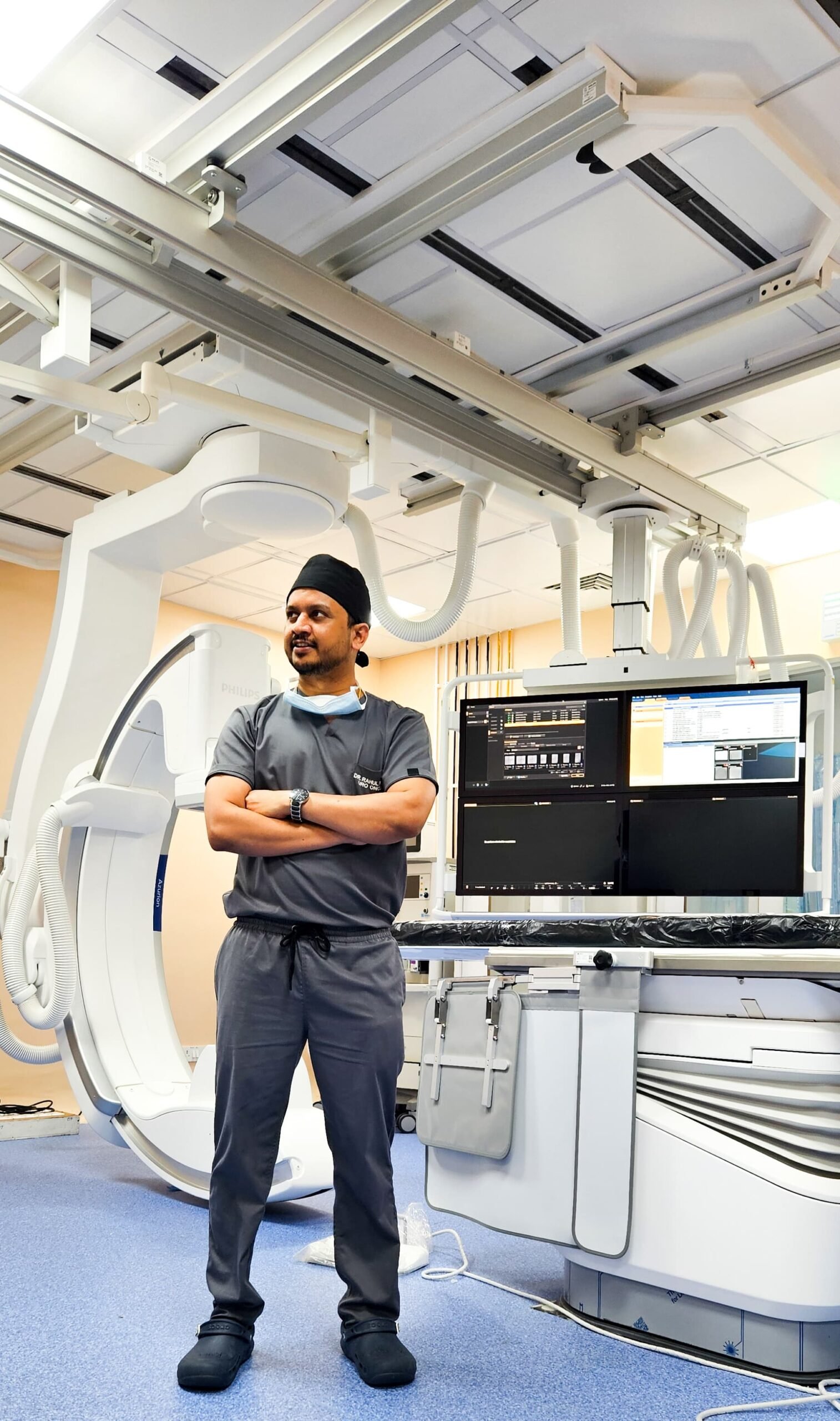
Prostate cancer surgery is one of the most technically demanding operations in urology, and the outcome depends heavily on the experience of the operating surgeon. Dr. Pradhan’s approach is direct and honest — every reasonable option is explained clearly, including doing nothing actively, with no rush to push surgery when surveillance is reasonable.

MBBS, MS, MCh (Urology) — Comprehensive surgical and urological training

300+ Major Robotic Surgeries — Including robot-assisted radical prostatectomy

Fellowship in Minimal Access Surgery (FMAS)

Subspecialty in Uro-Oncology — Prostate, kidney, bladder, penile and testicular cancers
—– Common Questions —–
FAQs
What is the best age to start prostate cancer screening?
Men above 50 should get a PSA test annually. If your father or brother has had prostate cancer, screening should begin at 45. It is a simple blood test that could be life-saving.
Is robotic prostatectomy available in Bhubaneswar?
Dr. Rahul Pradhan a Intuitive USA certified Da Vinci Robotic Surgeon with over 300 robotic surgeries completed. As on March 2026, none of the Private hospitals in Bhubaneswar has a Surgical robot. It is expected to start at Bagchi Sri Shankara cancer centre Bhubaneswar in the later half of 2026.
Does a high PSA always mean cancer?
No. Elevated PSA can result from benign prostate enlargement, prostatitis, or recent physical activity. Dr. Pradhan assesses PSA alongside other clinical findings before recommending next steps.
How long is recovery after robotic prostate surgery?
Most patients are discharged within 2 to 3 days. Light activity resumes in about 2 weeks, and most patients return to normal work within 3 to 4 weeks.