Bladder Cancer Treatment in
Bhubaneswar
Expert diagnosis and comprehensive surgical care for bladder cancer — from TURBT and BCG therapy to robot-assisted radical cystectomy — delivered by Dr. Rahul Pradhan, a leading Urologist in Bhubaneswar and Uro-Oncologist with an MCh in Urology and over nine years of specialised experience.
300+
MCh
FMAS
9+
———- About the condition
What Is Bladder Cancer?
Bladder cancer occurs when abnormal cells grow in the bladder lining, the organ that stores urine. It is one of the most common urological cancers, and in Odisha, delayed diagnosis due to low awareness often leads to complications.
The most common type is Urothelial Carcinoma (Transitional Cell Carcinoma). It is classified into:
- Non-Muscle-Invasive Bladder Cancer (NMIBC):Limited to the inner lining and highly treatable when detected early.
- Muscle-Invasive Bladder Cancer (MIBC): Spreads into deeper muscle layers and requires more aggressive treatment.
Early detection significantly improves outcomes, making timely consultation with a urologist in Bhubaneswar essential.
Did You Know?
The second most frequently diagnosed cancer among men worldwide is prostate cancer. The disease continues to increase in India but people still lack proper understanding about it and screening tests for early detection remain infrequent. A disease detection test exists which uses a basic PSA blood test to identify cancer at its initial treatable stage. Men above 50 — or 45 with a family history — should consider annual screening.
—– About the condition —–
Common Symptoms of Bladder Cancer?
Bladder cancer may present with a range of symptoms. Any of the following warrant an immediate consultation with a urologist in Bhubaneswar:
Blood in the Urine (Haematuria): The most common presenting symptom. Urine may appear pink, red, or brownish. It is often painless and may come and go intermittently.
Frequent Urination: An unusual or persistent need to urinate more often than normal.
Urgent Urination: A sudden, strong urge to urinate that is difficult to control.
Painful Urination (Dysuria): A burning or stinging sensation during urination, even in the absence of infection.
Pelvic or Lower Back Pain: Discomfort in the lower abdomen, pelvis, or back, which is more commonly associated with advanced-stage disease.
Unexplained Fatigue and Weight Loss: Persistent tiredness or unintended weight loss with no identifiable cause.
Difficulty Passing Urine: Obstruction caused by the tumour may result in a weak or interrupted urinary stream.
Important Warning — Do Not Ignore This Symptom
Blood in the urine (haematuria) even if it appears only once, is painless, or resolves on its own, is a significant warning sign that must be evaluated by a urologist without delay. Haematuria can also be the first sign of other urological conditions such as kidney cancer, making early evaluation essential.
Book Your Consultation Today
Noticed a lump, swelling, or unusual heaviness? Do not wait. Early evaluation makes all the difference in testicular cancer outcomes.
—– About the condition —–
Stages of Bladder Cancer?
Accurate staging is the foundation of an effective bladder cancer treatment plan. Dr. Rahul Pradhan uses advanced diagnostic tools to determine the precise stage before recommending any course of treatment.
| Stage | Classification | Description | Prognosis |
| Stage 0 | Non-Invasive (CIS/Ta) | Cancer cells present only on the innermost lining of the bladder; no invasion of deeper tissue. | Excellent |
| Stage I | Superficial (T1) | Cancer has penetrated the connective tissue beneath the lining but has not reached the muscle layer. | Very Good |
| Stage II | Muscle-Invasive (T2) | Cancer has grown into the inner or outer layers of bladder muscle, requiring more aggressive treatment. | Good with Surgery |
| Stage III | Locally Advanced (T3/T4a) | Cancer has spread beyond the bladder wall to surrounding fat tissue or nearby organs. | Moderate |
| Stage IV | Metastatic (T4b/N+/M+) | Cancer has spread to lymph nodes, distant organs, or distant sites, requiring multimodal treatment. | Requires Specialist Care |
Bladder Cancer Treatments Offered by Dr. Rahul Pradhan
Every treatment plan at Dr. Rahul Pradhan’s clinic is designed around the specific stage, histological grade, and individual health profile of the patient. As a senior urologist in Bhubaneswar with advanced uro-oncology training, Dr. Pradhan offers the full spectrum of evidence-based bladder cancer care.
Cystoscopy and Biopsy — Diagnosis & Staging
Cystoscopy is the gold-standard diagnostic procedure for bladder cancer. Dr. Rahul Pradhan uses a thin, flexible optical instrument inserted through the urethra to directly visualise the bladder lining, identify suspicious lesions, and guide precise tissue sampling (biopsy) for histopathological confirmation and staging.
- Flexible or rigid cystoscopy, selected based on clinical indication
- Urine cytology for additional diagnostic support
- Immediate tissue biopsy for histopathological analysis
- CT urogram or MRI for staging and extent of disease
TURBT — Transurethral Resection of Bladder Tumour
TURBT is the primary surgical treatment for non-muscle-invasive bladder cancer (NMIBC). The procedure is performed entirely through the urethra using an electrosurgical resection loop, requiring no external incisions. It serves both as a definitive staging procedure and as the initial therapeutic intervention.
- Completely endoscopic — no skin incisions required
- Performed under general or spinal anaesthesia
- Typically a day-care or one- to two-night hospital admission
- Followed by intravesical BCG or chemotherapy instillation as indicated
Intravesical BCG Therapy and Chemotherapy
Following TURBT, instillation of BCG (Bacillus Calmette-Guérin) or chemotherapy agents such as Mitomycin-C directly into the bladder is a proven strategy to eliminate residual cancer cells and significantly reduce the risk of recurrence in intermediate- and high-risk NMIBC.
- BCG immunotherapy: weekly intravesical instillations over six weeks
- Mitomycin-C or Epirubicin as alternative agents depending on patient profile
- Maintenance BCG therapy for high-risk non-muscle-invasive cases
- Regular cystoscopic surveillance conducted throughout and after treatment
Radical Cystectomy — Robotic & Laparoscopic Surgery for MIBC
For muscle-invasive bladder cancer (MIBC) or BCG-unresponsive high-risk NMIBC, radical cystectomy — complete surgical removal of the bladder — is the definitive curative option. Dr. Rahul Pradhan, a Urologist in Bhubaneswar, offers robot-assisted radical cystectomy, one of the most technically demanding procedures in urological oncology, with the precision, reduced blood loss, and accelerated recovery that minimally invasive surgery provides.
- Robot-assisted (da Vinci) or laparoscopic approach based on clinical suitability
- Bilateral pelvic lymph node dissection for accurate oncological staging
- Urinary diversion: orthotopic neobladder or ileal conduit
- Recovery typically achieved within four to six weeks, compared to eight to twelve weeks with conventional open surgery
Urinary Diversion — Reconstruction after Cystectomy
Following bladder removal, urinary function is restored through carefully planned reconstruction. Dr. Pradhan provides detailed pre-operative counselling to help each patient and their family understand which option is best suited to their anatomy, lifestyle, and recovery goals.
- Orthotopic neobladder: an internal pouch constructed from bowel, allowing natural voiding through the urethra
- Ileal conduit: the most widely performed, reliable form of urinary diversion
- Continent cutaneous diversion (Indiana pouch) for selected patients
- Pre-surgical stoma therapy counselling and education as required
Surveillance and Long-Term Follow-Up
Bladder cancer carries one of the highest recurrence rates among urological cancers. Structured, long-term surveillance is therefore not optional — it is an integral component of treatment. Dr. Rahul Pradhan, Uro-Oncologist in Bhubaneswar develops a personalised, risk-stratified surveillance programme for every patient to ensure any recurrence is detected at the earliest, most treatable stage.
- Cystoscopy every three months during the first year post-treatment
- Urine cytology and cross-sectional imaging at defined intervals
- Risk-stratified follow-up scheduling based on tumour grade and stage
- Evidence-based lifestyle guidance, including tobacco cessation support
The Gleason Score (which ranges between 6 and 10) and Grade Groups (which extend from 1 to 5) function as the two grading systems that determine prostate cancer classification. The system assigns lower scores to tumors which experience slow growth while the higher scores indicate tumors which develop into aggressive cancers. The treatment schedule will receive determination through the grading system.
Book Your Consultation Today
Noticed a lump, swelling, or unusual heaviness? Do not wait. Early evaluation makes all the difference in testicular cancer outcomes.
Rahul Pradhan’s Approach to Bladder Cancer Treatment in Bhubaneswar
From the initial consultation through to long-term recovery, every step of the patient journey at Dr. Rahul Pradhan’s clinic is designed around safety, clarity, and clinical excellence.
—– Urology Specialist in Bhubaneswar
Why Choose Dr Rahul Pradhan for Bladder Cancer Treatment in Bhubaneswar
Patients from across Odisha and neighbouring states choose Dr. Rahul Pradhan for his technical precision, compassionate approach, and commitment to evidence-based care. Here is what distinguishes his practice:

Super-Specialist Qualifications
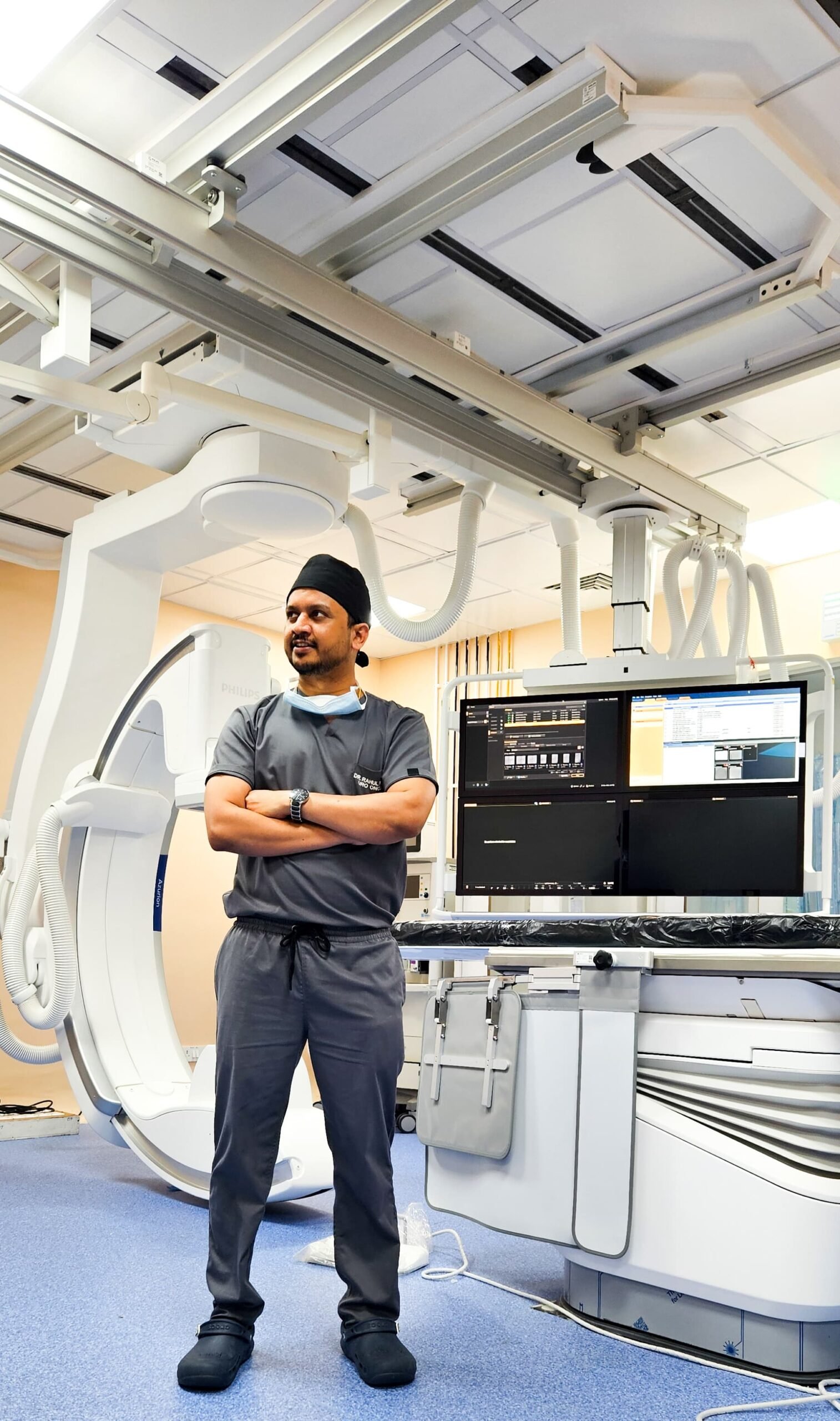
Dr. Rahul Pradhan holds an MCh in Urology — the highest postgraduate qualification in urology in India — along with an MS in General Surgery, MBBS, and a Fellowship in Minimal Access Surgery (FMAS). His formal training in uro-oncology and robotic surgery places him among a small group of highly specialised urologists in Bhubaneswar and Odisha.

Advanced Robotic Surgery Expertise
With over 300 major robotic surgeries performed, Dr. Pradhan is one of Bhubaneswar’s most experienced robotic uro-oncological surgeons. Robot-assisted radical cystectomy requires exceptional technical skill; his track record gives patients and families justified confidence in complex surgical situations.

Complete Bladder Cancer Care Under One Roof
From the first cystoscopy through BCG therapy, radical cystectomy, urinary reconstruction, and long-term surveillance — all aspects of bladder cancer care are available through Dr. Pradhan’s practice in Bhubaneswar, alongside related uro-oncology services such as testicular cancer, eliminating the need for patients to travel to distant tertiary centres.

Transparent, Patient-Centred Communication
Dr. Pradhan is widely recognised for explaining diagnoses and treatment options in clear, accessible language. Patients and their families are empowered to make fully informed decisions at every stage, consistent with his ethical and patient-first philosophy.
Minimally Invasive Approach Where Clinically Appropriate
Wherever oncologically safe, Dr. Pradhan favours laparoscopic or robotic surgical techniques. This approach results in significantly less intraoperative blood loss, reduced post-operative pain, shorter hospital stays, and meaningfully faster return to normal daily activity.

Serving Patients Across Odisha
Patients travel from Cuttack, Puri, Berhampur, Rourkela, Sambalpur, and beyond to access specialist uro-oncology care that was previously only available in major metropolitan centres. Dr. Pradhan’s clinic brings that level of expertise to Bhubaneswar.
Google Reviews


—– Common Questions —–
FAQs
Q1. What are the early signs of bladder cancer I should not ignore?
The most important early warning sign is blood in the urine (haematuria) — even if it appears only once, is completely painless, or resolves spontaneously. Additional symptoms include frequent or urgent urination and a burning sensation while urinating. Any of these symptoms should prompt an immediate appointment with a urologist in Bhubaneswar. Early detection significantly improves treatment outcomes.
Q2. What is TURBT, and will I need to remain in hospital?
TURBT (Transurethral Resection of Bladder Tumour) is a minimally invasive surgical procedure performed entirely through the urethra under anaesthesia — no incisions on the skin are required. It serves as both the definitive diagnostic staging procedure and the primary surgical treatment for non-muscle-invasive bladder cancer. Most patients are discharged within one to two days and return to normal activity within one to two weeks.
Q3. Can bladder cancer return after treatment?
Yes. Bladder cancer has one of the highest recurrence rates among all cancers, which is precisely why structured, long-term cystoscopic surveillance is an indispensable part of any complete treatment plan. Dr. Pradhan develops a personalised follow-up schedule based on individual risk stratification, enabling recurrence to be identified and addressed at the earliest possible stage.
Q4. What can I expect after bladder removal (radical cystectomy)?
Following radical cystectomy, urinary function is restored through carefully planned reconstruction. Eligible patients may receive an orthotopic neobladder — an internal pouch constructed from bowel that permits natural voiding — while others are better suited to an ileal conduit. Dr. Pradhan provides thorough pre-operative counselling to ensure every patient and their family fully understands the available options and what to expect during recovery.