
According to Dr. Rahul Pradhan,an experienced Uro-oncologist in Bhubaneswar, “BCG remains one of the most effective treatments for non-muscle-invasive bladder cancer. When used in the right patients, it can significantly reduce the risk of recurrence while preserving the bladder.”Understanding how BCG works and what to expect can help patients approach treatment with greater confidence.
Which Types of Bladder Cancer Are Treated With BCG?
BCG therapy is mainly used for early / non-muscle-invasive bladder cancer (NMIBC), where the cancer is limited to the inner lining of the bladder and has not grown into the bladder muscle.
It is commonly recommended for patients with:
High-grade Ta bladder cancer
T1 bladder cancer
Carcinoma in situ (CIS)
Recurrent bladder tumours
Bladder cancers with a higher risk of returning
In most cases, BCG treatment starts after TURBT (Transurethral Resection of Bladder Tumour), a procedure used to remove visible tumours from the bladder.
However, BCG is not suitable for everyone. It is generally not used for:
Muscle-invasive bladder cancer
Advanced or metastatic bladder cancer
Patients with severely weakened immune systems
Individuals with active urinary tract infections
Patients unable to hold their urine for 2 hours
Patients who had a serious BCG infection in the past
Patients who are actively bleeding
The main goal of BCG therapy is to improve the bladder immunity by recruiting immune cells into the bladder that reduce the chances of the cancer coming back in the future.
Concerned about bladder cancer recurrence? Get a personalised evaluation and treatment plan today
How BCG Therapy Works to Reduce Cancer Recurrence
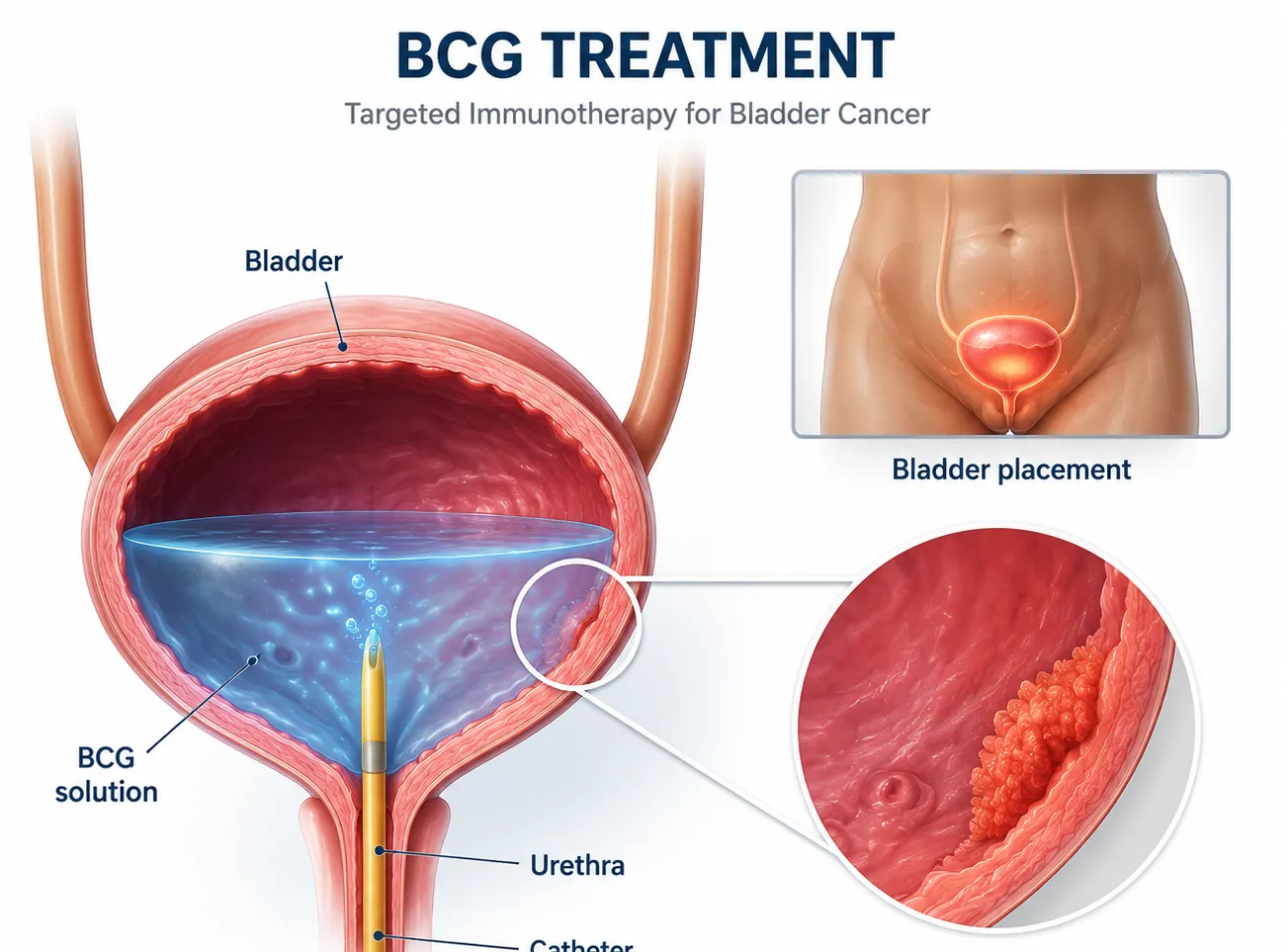
After being introduced to the bladder, BCG triggers the body’s immune system to identify and fight cancer cells which could have been left behind from surgery to remove the tumour.
Here’s how it helps:
Activates the Immune System
BCG stimulates the immune system in the bladder, which activates the body’s natural defence cells.
Targets Remaining Cancer Cells
The activated immune cells will seek and eliminate abnormal cells in the bladder, including any remaining cancer cells after surgery.
Reduces the Risk of Recurrence
The BCG reduces the likelihood of further tumour development because it removes microscopic cancer cells.
Provides Long-Term Protection
The ongoing immune response inside the bladder decreases the chances for bladder cancer to return over time.
What Is the Treatment Schedule Like?
Most patients receive:
- One treatment each week for 6 weeks (induction therapy)
- Additional maintenance treatments over months or years depending on risk level
Each session usually takes less than an hour, and patients can typically return home the same day.
How Effective Is BCG in Preventing Bladder Cancer Recurrence?
Bladder cancer has a tendency to return even after successful tumour removal. BCG therapy helps lower this risk by stimulating the immune system to target remaining cancer cells inside the bladder.
Studies have shown that BCG can help:
- Reduce the chances of bladder cancer coming back
- Lower the risk of the disease becoming more aggressive
- Improve long-term bladder preservation
- Help some patients avoid bladder removal surgery
BCG is particularly beneficial for patients with high-grade tumours, carcinoma in situ (CIS), recurrent bladder cancer, or multiple bladder tumours.
The results are often best when patients complete the recommended treatment schedule and continue with regular follow-up appointments. While BCG significantly reduces the risk of recurrence, ongoing monitoring remains important, as bladder cancer can still return or show signs of progression in some cases.
Long-Term Follow-Up After Successful BCG Therapy
However, after successful BCG treatment, it is important that follow-up is continued as bladder cancer may return months or years later.
Your plan to follow up may involve:
Regular Cystoscopy
A small camera is inserted into the bladder to look for any tumor recurrence.
Urine Tests
Urine samples can be analysed for any abnormal cells.
Imaging Scans
For some patients, an ultrasound or CT scan might be needed to assess the urinary tract.}
Watch for Symptoms
If you see any of the following, talk with your doctor:
- Blood in the urine
- Burning while urinating
- Frequent urination
- Pelvic discomfort
- Recurrent urinary infections
Experiencing symptoms or preparing for BCG treatment? Seek expert guidance for the right next steps
FAQs
Does the BCG treatment hurt?
BCG therapy is well-tolerated by most patients. Mild burning sensation during micturition, frequency of micturition or slight discomfort for a day or two after every session. The symptoms tend to go away and get better on their own.
How long does BCG therapy last?
Typically, the first 6 weekly sessions are the first steps in treatment. Your urologist may consider giving you maintenance therapy for several months or even years to decrease the risk of future recurrence of the cancer, depending on your cancer risk and response to therapy.
Is bladder cancer curable after treatment with BCG?
Although BCG reduces the risk from bladder cancer recurrence, it does not completely prevent it. That is why cystoscopy and follow-up visits are still a significant aspect of treatment.
Who is not eligible for BCG therapy?
BCG is not for everybody. Other treatment options may be needed for patients who have muscle-invasive bladder cancer, an active urinary infection or a severely compromised immune system.