
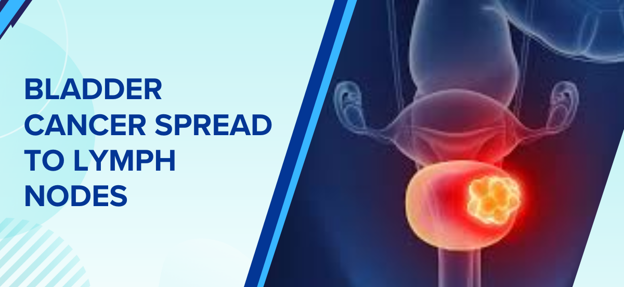
When bladder cancer spreads to nearby lymph nodes, the disease shifts from localised to regional, and treatment intensity has to match. Around 25 percent of muscle-invasive bladder cancer patients have lymph node involvement at diagnosis. Outcomes depend on the number of involved nodes, their size, and whether systemic therapy is given before surgery.
According to Dr. Rahul Pradhan, a senior Consultant Uro-Oncologist in Bhubaneswar,
“Lymph node involvement changes how we treat bladder cancer. It’s no longer about removing the tumour alone, but choosing the right sequence of chemotherapy, surgery, and immunotherapy. Done well, node-positive disease is still curable.”
Signs and Symptoms of Bladder Cancer With Lymph Node Involvement
When bladder cancer spreads to lymph nodes, the symptoms often layer on top of what patients are already experiencing from their original tumour. The new signs can be easy to dismiss as just feeling run-down or stressed, which is exactly the problem.
Here are the warning signs that deserve immediate attention:
- Persistent pelvic pain that won’t settle: A dull, nagging ache in your lower belly or pelvis that doesn’t respond to usual painkillers. Enlarged nodes can press on nearby nerves and structures.
- Swelling in one or both legs: When pelvic lymph nodes get large, they can block the natural drainage system in your legs, causing swelling that doesn’t go down even after resting.
- New lower back or flank pain: Persistent pain that comes from deeper than muscle soreness, sometimes signalling that nodes higher up (near the kidneys) are involved.
- Losing weight without trying: A drop of even 3-5 kg over a couple of months without changing your eating habits is worth a concern.
- Feeling tired all the time: Not the usual end-of-day tired. The kind that doesn’t go away even after a full night’s sleep or weekend off.
- Loss of appetite or feeling full quickly: When even small meals feel like too much, it’s worth investigating.
- A lump in the groin or above the collarbone: Less common, but when it happens, it’s a clear signal the disease has travelled further.
If you’ve already been treated for bladder cancer and any of these symptoms creep in, don’t wait for your next scheduled follow-up.
Worried about possible bladder cancer spread? Book a consultation today with one of the leading uro-oncologists in Bhubaneswar and get a clear evaluation plan. Book an appointment.
How Lymph Node Spread Is Diagnosed and Staged
- CT scan of abdomen and pelvis with contrast:Usually the first scan ordered. Good at spotting enlarged nodes (above 1 cm), but smaller affected nodes can slip through.
- MRI of the pelvis: Better than CT for seeing how deep the tumour has invaded the bladder wall, and for picking up smaller pelvic nodes. Often used when contrast CT isn’t an option.
- PET-CT scan: This one catches metabolically active disease that other scans miss. Especially useful for checking how well chemotherapy has worked, or when the initial imaging gives mixed signals.
- Bone scan: Ordered if there’s bone pain, abnormal blood tests, or signs that the cancer may have travelled beyond the lymph nodes.
- Cystoscopy with biopsy: Confirms what the primary tumour is doing and provides tissue for tests that guide which chemotherapy to use.
- Lymphadenectomy at surgery: The most accurate way to confirm involvement. Lymph nodes are physically removed during cystectomy and examined under a microscope.
| Stage | What It Means | Usual Approach |
| N0 | No nodes affected | Cystectomy with pelvic node dissection |
| N1 | One pelvic node | Chemotherapy first, then cystectomy |
| N2 | Multiple pelvic nodes | Chemotherapy first, then cystectomy |
| N3 | Common iliac nodes | Systemic therapy first, surgery if it responds |
Treatment Approaches When Bladder Cancer Has Spread to Lymph Nodes
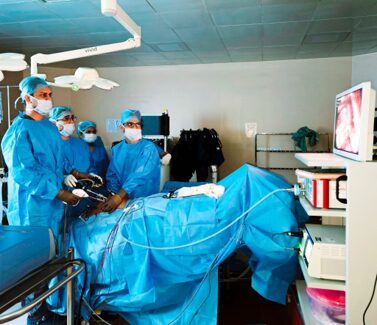
Treatment is multimodal. Sequence matters as much as choice. Most fit patients receive systemic therapy first to shrink disease, followed by laparoscopic or robotic surgery, and sometimes additional therapy afterwards.
Step 1: Chemotherapy before surgery
Cisplatin-based chemotherapy is the standard starting point. It shrinks both the bladder tumour and involved nodes, and bumps up the chances of cure by 5-10 percent compared to surgery alone. Most patients need 3-4 cycles before the next step.
Step 2: Surgery
Once chemotherapy has done its work, surgery removes the bladder along with all the lymph nodes from the obturator fossa up to the common iliac vessels. This is the curative step for most patients with limited nodal involvement. For the full picture of what this surgery involves and the recovery, see our breakdown on radical cystectomy for bladder cancer.
Step 3: Therapy after surgery
For high-risk patients with residual disease at cystectomy, adjuvant nivolumab (immunotherapy) is now standard. Given for up to a year after surgery, it significantly extends the time before any recurrence.
When surgery isn’t possible
If surgery isn’t possible because disease has spread too widely, treatment shifts to chemotherapy followed by immunotherapy. Newer targeted therapies like FGFR inhibitors and enfortumab vedotin have extended survival for selected patients in recent years.
Outcomes depend heavily on how the cancer responds to that first round of chemotherapy. Complete nodal shrinkage pushes 5-year survival above 50 percent, and adjuvant immunotherapy now helps even when some disease remains. Most patients have CT or PET-CT every 3-6 months for two years, with surveillance continuing for at least 5 years to catch late recurrences early.
FAQs
Can bladder cancer with lymph node spread be cured?
Yes in selected cases. Patients with limited nodal involvement who respond well to chemotherapy before surgery have 5-year survival rates of 30-50 percent.
How is lymph node involvement detected?
Through CT, MRI, or PET-CT imaging, combined with lymph node removal at surgery. Surgical sampling remains the most accurate way to confirm.
Do I need chemotherapy before surgery if lymph nodes are involved?
Yes for most fit patients. Cisplatin-based chemotherapy improves survival by 5-10 percent compared to surgery alone, and is considered standard care.
What is the role of immunotherapy in node-positive disease?
Adjuvant nivolumab is now standard for high-risk patients with residual disease at cystectomy. It’s also used as first-line treatment when surgery isn’t possible.
How often is follow-up needed after treatment?
CT or PET-CT every 3-6 months for two years, then less frequently. Long-term surveillance with blood tests and periodic imaging continues for at least 5 years.