

Low-grade bladder cancer returns in 50 to 70 percent of patients within five years of initial treatment, even when the first tumour was fully removed. Most recurrences appear in the first two years and are caught on routine surveillance cystoscopy. Recurrent low-grade tumours rarely progress to muscle invasion, but ignoring them lets multiple lesions develop and eventually require more aggressive intervention.
According to Dr. Rahul Pradhan, Uro Oncologist in Bhubaneswar, “The first recurrence is usually the easiest to manage, and patients who stay on schedule with their cystoscopy almost always get diagnosed in time for a simple outpatient procedure. The ones who skip surveillance are the ones who end up needing bigger surgery.”
Recognizing Early Signs of Recurrent Bladder Cancer
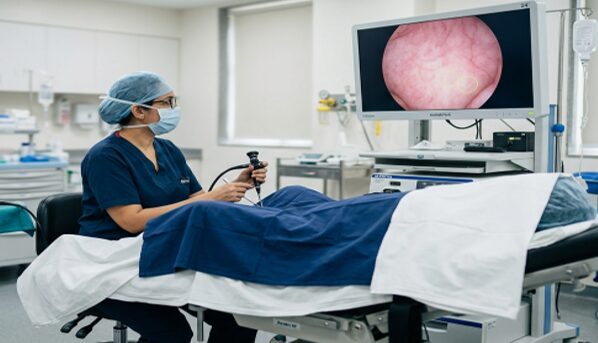
Recurrent bladder cancer often returns quietly, with symptoms that look almost identical to the first episode. Many patients dismiss them as a passing infection or stone, which delays diagnosis and lets the tumour grow before the next scheduled cystoscopy.
The warning signs to flag immediately include:
- Visible blood in urine (hematuria): The most common sign, appearing in 70 to 80 percent of recurrences. Bleeding is often painless and stops on its own, which is exactly why patients ignore it.
- Frequent urination or sudden urgency: New-onset frequency or a “right now” urge to void without infection often indicates tumour irritation of the bladder lining.
- Burning or discomfort during urination: Persistent dysuria with clean urine cultures, especially after two antibiotic courses, should never be dismissed in someone with a prior bladder cancer history.
- Pelvic, flank, or lower abdominal pain: Less common but worth investigating immediately, since it can suggest a larger or invasive recurrence.
- Unexplained fatigue or weight loss: Late but important, often indicating the recurrence has been progressing for months without detection.
Patients with a prior bladder cancer diagnosis should treat any of these symptoms as a recurrence until proven otherwise. Surveillance cystoscopy, scheduled every 3 to 6 months in the first two years, remains the single most effective tool for early detection.
Previously diagnosed with bladder cancer and noticing new symptoms? Consult a leading uro-oncologist in Bhubaneswar to check for recurrence.
Factors That Increase the Risk of Low-Grade Bladder Cancer Returning
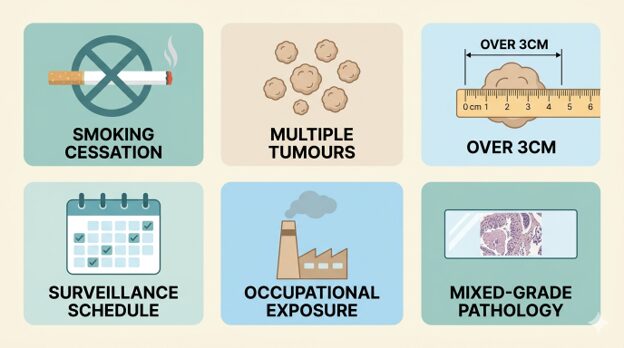
Recurrence rates vary between patients, and a handful of clinical and lifestyle factors predict how likely the cancer is to come back after first treatment.
The main contributors include:
- Multiple tumours at initial diagnosis: More than one tumour at first presentation significantly raises recurrence risk versus a single lesion.
- Tumour size above 3 cm: Larger tumours more often leave behind microscopic disease that regrows over months.
- Continued smoking after treatment: Smoking drives recurrence even after the original tumour is removed. Quitting reduces risk substantially within two years.
- Mixed-grade pathology: Low-grade tumours with high-grade areas behave more aggressively and need closer monitoring.
- Inadequate first resection: Incomplete tumour removal at the original TURBT is a major preventable cause of recurrence.
- Skipped surveillance cystoscopy: Missed follow-up visits let tumours grow undetected and become harder to manage.
- Occupational exposures: History of working with industrial dyes, rubber, leather, or aromatic amines raises lifelong recurrence risk.
Recurrence patterns typically look like this by risk profile:
Three urinary diversion options are typically considered, each with distinct trade-offs:
| Risk Category | Recurrence at 5 Years | Surveillance Schedule |
| Low risk (single small tumour) | 30-40% | Cystoscopy every 6-12 months |
| Intermediate risk (multiple or larger) | 50-70% | Cystoscopy every 3-6 months |
| High risk (recurrent or high-grade) | 70-80% | Cystoscopy every 3 months for 2 years |
Modifiable factors like smoking and surveillance adherence have the biggest impact on outcomes. Patients who quit smoking and stick to their cystoscopy schedule cut recurrence rates by nearly half.
Treatment Strategies for Recurrent Low-Grade Bladder Cancer

Treatment of recurrent low-grade bladder cancer is usually bladder-preserving, with most patients managed through repeat TURBT and intravesical therapy. Surgery is reserved for cases that progress despite conservative treatment.
Main treatment approaches include:
- Repeat TURBT: First-line for any recurrence. The tumour is resected through the urethra with no skin incision and most patients go home within 24 hours.
- Intravesical chemotherapy (mitomycin C or gemcitabine): Single-dose installation within 24 hours of TURBT reduces recurrence risk by 15 to 20 percent. Frequent recurrences may need a 6-week induction course.
- Intravesical BCG immunotherapy: Used for intermediate and high-risk patients to stimulate the immune system against tumour cells. Given weekly for 6 weeks followed by maintenance over 1 to 3 years.
- Office-based fulguration: Small recurrent tumours can be treated under local anaesthesia in the outpatient setting, avoiding repeat operating-theatre visits.
- Radical cystectomy: Reserved for patients whose disease progresses to high-grade or muscle-invasive tumours despite conservative management. For more on when this becomes the safer option, read our breakdown on radical cystectomy for bladder cancer.
Treatment choice depends on how often the cancer recurs, how many tumours appear, and whether grade or stage shifts over time. Isolated infrequent recurrences often need nothing more than periodic TURBT and routine surveillance, while frequent or worsening disease benefits from BCG and closer monitoring.
Lifestyle changes matter as well. Quitting smoking, maintaining adequate hydration for kidney function, eating a balanced diet, and reducing exposure to occupational carcinogens all measurably reduce recurrence risk.
Patients across Odisha trust Dr. Rahul Pradhan (Uro Oncologist) for bladder cancer surveillance and recurrence management for his methodical TURBT technique, attention to first-resection completeness, and structured follow-up protocols. With over 300 major robotic procedures and extensive uro-oncology training, he provides clinical clarity at every recurrence decision.
Concerned about bladder cancer recurrence? Book a consultation with a leading uro-oncologist in Bhubaneswar for a personalized surveillance and treatment plan.
FAQs
How often does low-grade bladder cancer come back?
Recurrence happens in 50 to 70 percent of patients within five years, even after complete initial resection, which is why surveillance cystoscopy matters so much.
Can recurrent low-grade bladder cancer turn aggressive?
Yes, in around 10 to 15 percent of cases. Each recurrence is biopsied to check for grade progression, which is why monitoring matters even for low-grade disease.
How is recurrence diagnosed?
Through surveillance cystoscopy, urine cytology, and sometimes imaging. Cystoscopy remains the gold standard since it directly visualises the bladder lining.
Does quitting smoking really reduce recurrence?
Yes, significantly. Patients who quit after diagnosis cut recurrence risk by 30 to 40 percent within two years.
How long do I need surveillance after low-grade bladder cancer?
Lifelong, though frequency drops from every 3 to 6 months in the first two years to annual cystoscopy after five years of being recurrence-free.