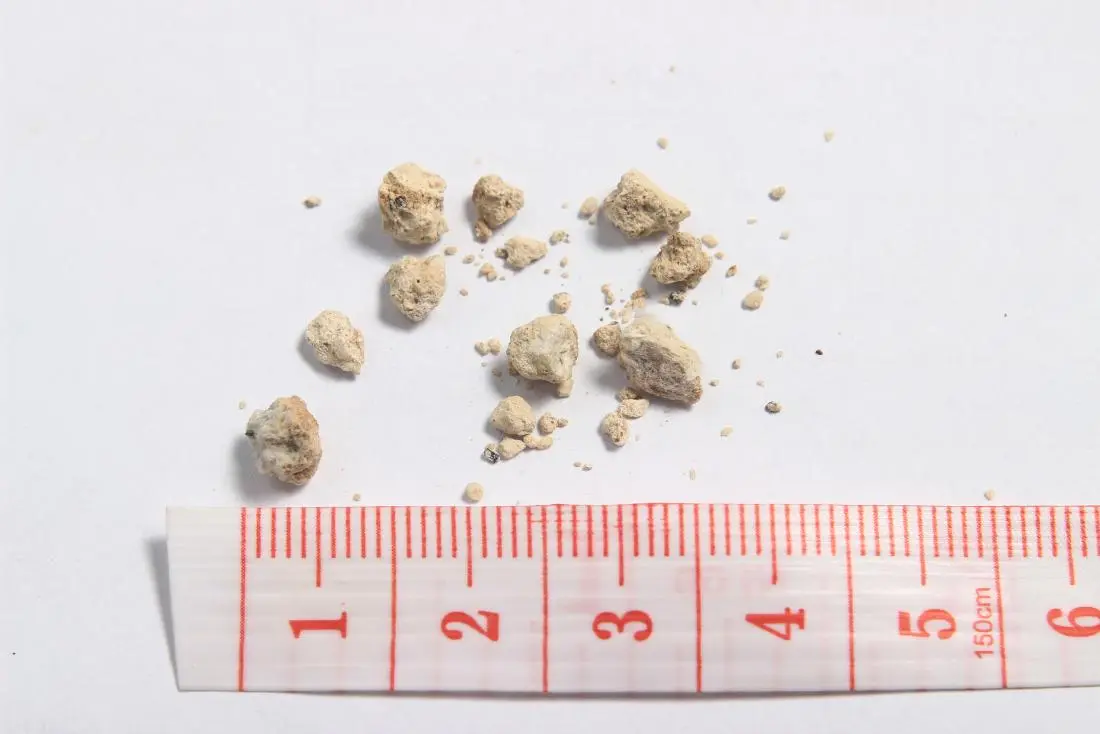
Kidney stones under 4 mm pass on their own in about 80 percent of cases.Stones from 4 to 6 mm pass on their own in about 60 percent of cases.Stones over 6 mm usually need surgery. Anything past 10 mm almost never passes naturally.
According to Dr. Rahul Pradhan, a Consultant Uro-Oncologist and Urologist in Bhubaneswar,”A 7 mm stone with obstruction usually goes to the OT the same day. A 9 mm stone parked quietly in the lower pole? Sometimes we just watch. Where it sits and what it’s blocking matters as much as the size.”
What kidney stone size actually needs surgery?
Size is the biggest variable,not the only one Hardness matters Location to And drainage decides urgency.
- Below 4 mm: Most pass within a month.Drink water take an alpha-blocker like tamsulosin,deal with the pain.Surgery only enters the picture if the stone gets stuck.
- 4 to 6 mm: Now you’re at coin-flip territory.Closer to 60 percent will pass with patience. We usually wait three to four weeks before talking about anything more aggressive. Fever changes everything.
- 6 to 10 mm: Passage rate drops below 50 percent. Ureteroscopy with laser is the usual call here. Waiting it out gets risky once the kidney starts struggling.
- Above 10 mm: Don’t waste time. These almost never pass. Either RIRS or PCNL, with the latter reserved for hard, lower-pole stones above 20 mm.
For 6 to 20 mm stones, laser stone surgery clears them in one sitting,no incision, 24-hour discharge.
When does a kidney stone become a surgical emergency?
Size doesn’t decide urgency. Some symptoms make even a tiny stone a same-day case. Ignoring them risks the kidney.
- Stone with fever: Sepsis territory. Even a 5 mm stone with chills warrants urgent decompression. Usually a DJ stent or nephrostomy within hours of presentation.
- Solitary kidney with obstruction: Blockage in your only working kidney needs surgery within 24 to 48 hours. No negotiating that timeline.
- Bilateral stones causing AKI: Both kidneys blocked means creatinine climbs fast. Stenting or surgery the same day, every time.
- Uncontrolled pain or vomiting: When tramadol and diclofenac stop holding the pain, the stone has to come out. Waiting becomes the dangerous option.
Why Choose Dr. Rahul Pradhan for Kidney Stone Surgery?
Dr. Rahul Pradhan is a Consultant Urologist and Uro-Oncologist. 9+ years in practice, 300+ major robotic surgeries on the Da Vinci platform. His training: MBBS, MS in General Surgery, MCh in Urology, FMAS, and a Post-Doctoral Fellowship in Uro-Oncology and Robotic Surgery from Sri Shankara Cancer Hospital, Bangalore.
He handles laser stone surgery (RIRS and PCNL), HoLEP for BPH, and complex robotic urological procedures. Consultations run at Bagchi Sri Shankara Cancer Centre, Infovalley, with visiting OPDs at Rahat Hospitals, Sahidnagar. Memberships include the Urological Society of India, American Urological Association, and European Association of Urology. He’s also a peer reviewer for the International Journal of Surgery.
Ready to discuss your kidney Stone Treatment? Book a consultation today with one of the leading uro-oncologists in Bhubaneswar and get clarity on what your recovery will look like. – Book an appointment
FAQs
Can a 7 mm kidney stone pass naturally?
Yes, but only in about 50 percent of cases. Most need ureteroscopy.
Is a 5 mm kidney stone dangerous?
Not usually, but with fever or obstruction it becomes a surgical emergency.
What is the safest kidney stone surgery?
Laser ureteroscopy (RIRS) is the safest option for stones up to 20 mm.
How long does kidney stone surgery take?
Most laser ureteroscopy procedures take 30 to 60 minutes under spinal anaesthesia.