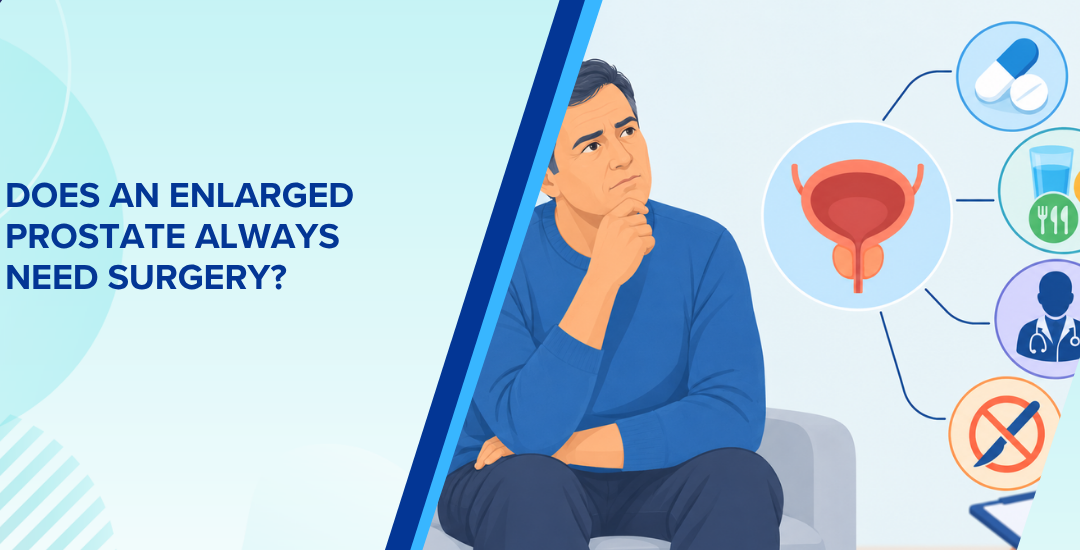
Most men with an enlarged prostate never see the inside of an operating theatre. Enlarged prostate treatment usually starts with watchful waiting, a few changes in routine and tablets, and benign prostatic hyperplasia (BPH) only calls for a procedure once medicines stop working or the blockage begins to do damage. Knowing where that line sits makes the decision far less frightening.
According to Dr. Rahul Pradhan, a Urologist in Bhubaneswar, “A big prostate on a scan isn’t a reason for an operation by itself. What decides it is how much the symptoms disrupt your day, and whether the bladder or kidneys are coming under strain. Plenty of men never need more than tablets and a few changes in routine.”
What Can Be Done for an Enlarged Prostate Without an Operation?
Most men begin with BPH treatment without surgery, and many never need anything more.
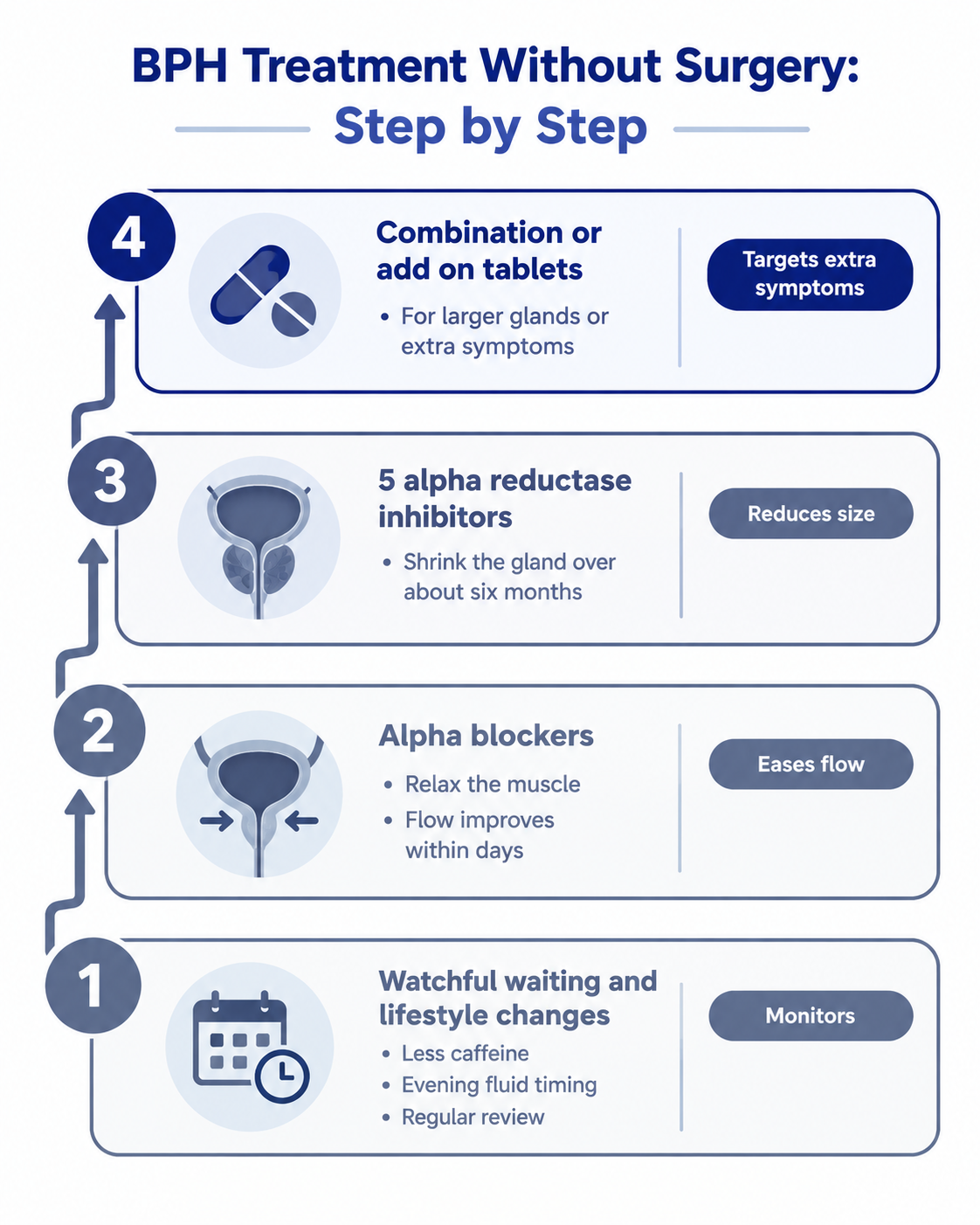
- Watchful waiting: With mild symptoms, tablets can wait. The plan is simple: less caffeine and fewer drinks late in the evening (that late cup of tea matters more than people expect), plus a regular review to watch the symptoms. It isn’t doing nothing. In a four year study of men managed this way, about a third experienced progression and roughly one in twenty suddenly couldn’t pass urine due to acute urinary retention.
- Alpha blockers: Tamsulosin is the usual example. It loosens the muscle at the bladder neck, so the stream often picks up within a few days. Symptom scores typically fall by 4 to 6 points, and dizziness or a change in ejaculation are the common side effects. The gland itself stays the same size.
- 5 alpha reductase inhibitors: Finasteride and dutasteride work on the gland itself. Give them six months and the prostate can shrink by as much as a quarter, though that mostly applies to glands above 30 grams. They also reduce the risk of blocked bladder less likely and can delay the need for surgery. The gland gets smaller. Going all the way back to its original size is unusual.
- Combination and add on tablets: For a larger gland with stubborn symptoms, an alpha blocker and a 5 alpha reductase inhibitor are often taken together. Tadalafil can help if erection problems come with the prostate trouble. Bladder relaxants suit men troubled by urgency, as long as the bladder still empties well.
Because cancer can cause similar symptoms, a PSA test and a clinical examination come first, as outlined on the page covering prostate cancer treatment.
At What Stage Does an Enlarged Prostate Need Surgery?
The size of the gland alone doesn’t settle it. The problems the blockage causes do.
Situation | Usual approach |
Mild symptoms, bladder empties well | Watchful waiting and lifestyle changes |
Symptoms that bother daily life | Medicines, reviewed after a few weeks |
Symptoms persist despite medicines, or side effects stop you taking them | A procedure is considered |
Retention, repeated infections, bladder stones or kidney strain | Surgery is usually advised |
- Urinary retention: The bladder can’t empty at all, or keeps failing to. Roughly 15 in 100 men who’ve had one episode have another, and about three quarters of that group end up needing surgery.
- Infections and bladder stones: Urine that sits in the bladder is a breeding ground for bacterias. Urinary tract infections keep recurring, and small stones can form in the residual urine.
- Kidney strain: This is the quiet one. A chronically over full bladder pushes pressure back towards the kidneys, and damage can build without much pain. Blood tests and an ultrasound catch it, which is exactly why they’re ordered.
- Medicines that no longer help: The tablets have stopped working, or the side effects make them unbearable. Bleeding from the prostate that keeps coming back, once other causes are ruled out. Any of these can make surgery the more appropriate option.
Gland size still matters when choosing a procedure, and what counts as enlarged is covered in our guide to normal prostate volume.
What Does Surgery for an Enlarged Prostate Involve?
When medicines aren’t enough, there are several procedures to choose from. The choice mostly comes down to the size of the gland and how fit the man is.
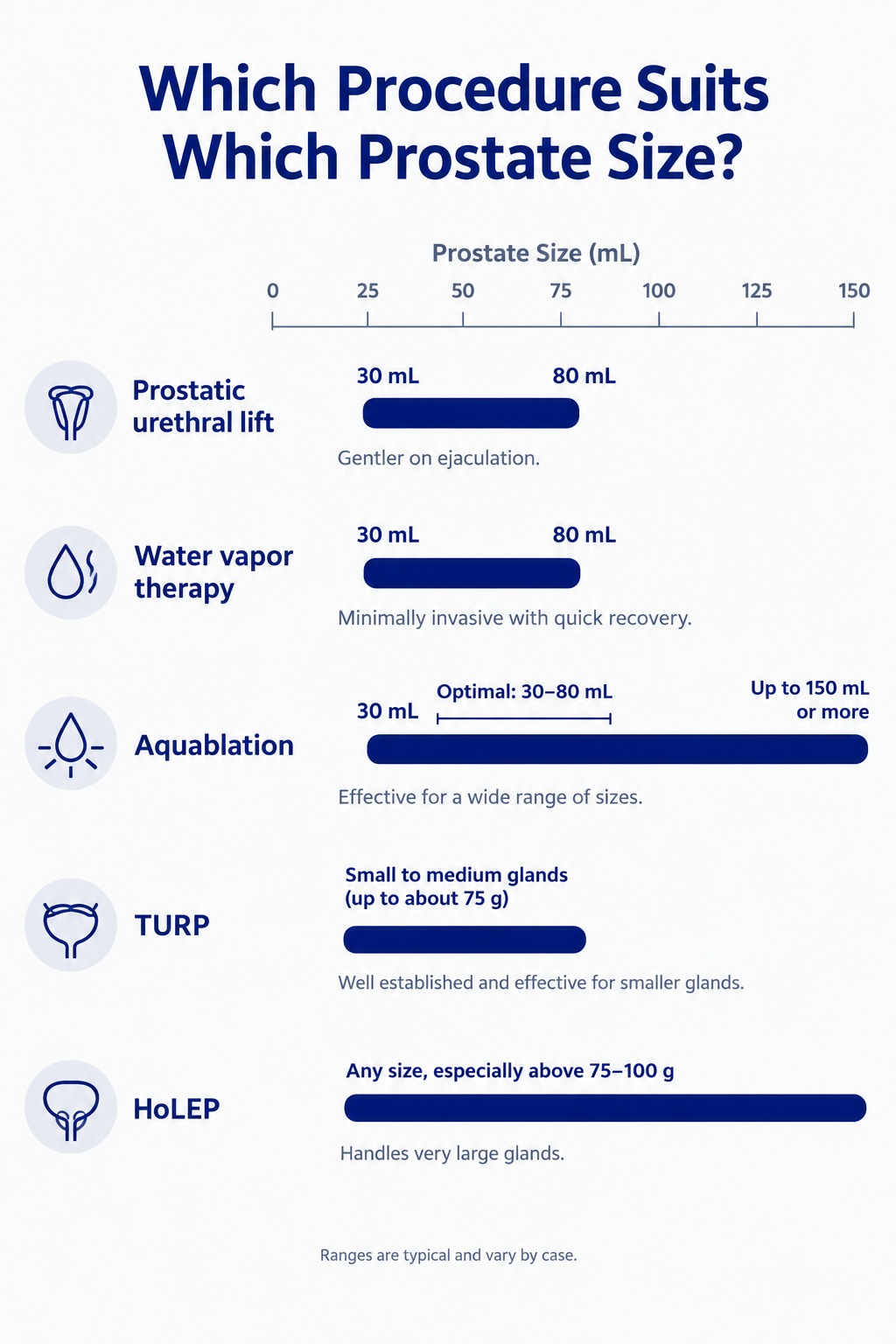
- Choosing the procedure: TURP removes the blocking tissue in pieces through the urethra and has been the standard for decades. For larger glands, laser enucleation (HoLEP) does the job without open surgery, with less bleeding and a shorter catheter stay than TURP. Open operations are now rare.
- Newer options: Water vapor therapy, the prostatic urethral lift and Aquablation tend to be gentler on ejaculation and erections. But they suit selected glands, may relieve symptoms less than the larger procedures, and aren’t available everywhere. Nothing is sent for examination afterwards, so a PSA test has to come first.
- Safety and success: Most men notice a clear improvement in flow and symptoms. No procedure carries a guarantee, though, and some men need more treatment down the line. After TURP, retrograde ejaculation is common: semen passes back into the bladder instead of out. It’s harmless, but it can be permanent. Burning, blood clots, erection changes and temporary leakage can also occur.
- Pain, recovery and cost: Transurethral procedures are done under anaesthesia, so the operation itself isn’t painful. The catheter can set off bladder spasms, and passing urine may burn for a few days. Medicines ease both. Normal activities usually resume within 3 to 6 weeks. Cost depends on the procedure, the hospital, the length of stay and insurance cover, so an itemised estimate before admission is worth asking for.
Laser based options such as HoLEP are explained in more detail in our guide to laser prostate treatment. Whichever route is chosen, it should rest on a proper assessment first: symptom score, prostate volume and how well the bladder empties.
Key Takeaways
Surgery isn’t automatic for an enlarged prostate. Most men do well on monitoring and tablets, the condition isn’t cancer, and with regular follow up it needn’t cut life short. The tipping points are a bladder that stops emptying, infections that keep returning, stones, kidney strain or medicines that no longer work. Procedure choice follows the size of the gland and the man’s general health, and recovery takes a few weeks.
Not sure whether your symptoms point to surgery or tablets?
FAQs
Is an enlarged prostate something to worry about?
Not by itself. It isn’t cancer, but blockage, infection or bleeding need prompt care.
When does an enlarged prostate need surgery?
When the bladder stops emptying, infections recur, stones form, or medicines fail.
How safe is surgery for an enlarged prostate?
Generally safe. Side effects such as dry ejaculation, bleeding or brief leakage can occur.
Can you live a long life with an enlarged prostate?
Yes. BPH itself isn’t life threatening when monitored and complications are treated.
Disclaimer: This blog is for educational and informational purposes only and should not be considered professional advice.