Robotic Kidney Cancer Surgery
in Bhubaneswar
What It Is
Robotic surgery to remove a kidney tumour, either taking out just the affected portion and preserving the rest of the kidney, or removing the kidney entirely when the case calls for it.
Who It Helps
Anyone diagnosed with renal cell carcinoma that imaging shows is still confined to the kidney, and who’s otherwise fit enough for the operation.
Cost
Comes down to whether it’s a partial or radical nephrectomy, which surgical approach is used, and how long the hospital stay runs.
With Dr. Rahul Pradhan
Robotic surgery from a Da Vinci-certified surgeon, with saving the kidney treated as the goal whenever the tumour allows it, plus follow-up that doesn’t stop at discharge.

Dr. Rahul Pradhan
Consultant Uro-Oncologist & Urologist
Rahat Hospital, Saheed Nagar & Bagchi Sri Shankara Cancer Centre, Bhubaneswar
Da Vinci Certified Console Surgeon
300+ Robotic & Uro-Oncological Surgeries
MBBS, MS, MCh Urology, FMAS · Postdoctoral Fellowship in Uro-Oncology & Robotic Surgery, Sri Shankara Cancer Foundation, Bengaluru
Types of Kidney Cancer

Renal Cell Carcinoma (RCC)
Other Kidney Tumours
Advanced Diagnosis for Kidney Cancer
Nobody gets scheduled for surgery on the strength of a single scan. Dr. Rahul Pradhan spends time with the imaging first — how big the tumour is, exactly where it sits, how it relates to the vessels running through the kidney — because those details are what actually decide whether the kidney can be saved.
Understanding the Stage of Cancer
CT and MRI scans get read against the TNM staging system to figure out whether the tumour is still sitting entirely within the kidney, has started creeping into nearby vessels, or has moved further than that.
Assessing Overall Health
Surgery has to work with the kidneys you have, not an ideal case. So how well both are currently functioning, along with blood counts and fitness for anaesthesia, all feed into what’s actually safe to do.
Planning the Right Treatment
A smaller tumour, roughly under 7 cm and still contained within the kidney, usually points toward partial nephrectomy. Once it’s bigger or more complicated than that, removing the whole kidney often becomes the more realistic option.
Looking at Advanced Cases Carefully
Once cancer has reached lymph nodes, major vessels, or beyond, surgery stops being something decided on its own. It gets weighed together with targeted therapy or immunotherapy, as one part of a larger plan rather than the whole answer.
A Team-Based Approach
Advanced or metastatic disease rarely stays in one specialist’s hands. Medical oncology gets pulled into the conversation early, so surgery and systemic treatment end up working alongside each other instead of in sequence.
What Is Dr. Rahul Pradhan’s Approach For Kidney Cancer?
Ask Dr. Pradhan what guides a kidney cancer treatment plan, and the honest answer is: whether the kidney can be kept. That question comes before almost everything else.


Robotic Kidney Cancer Surgery
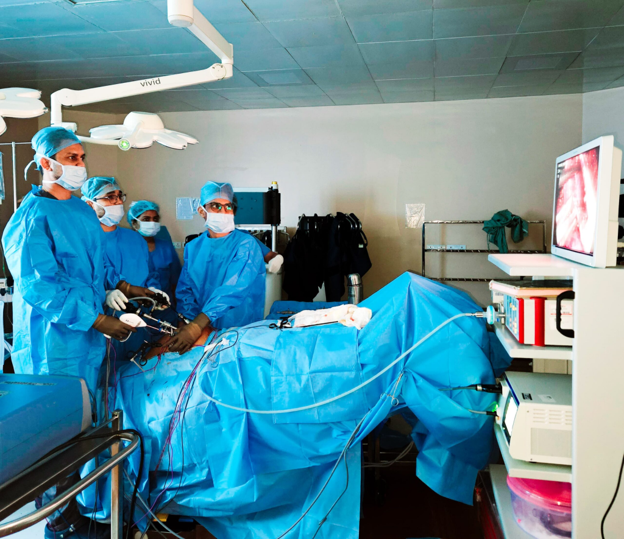
For early-stage kidney cancer, robotic partial nephrectomy is generally the preferred route wherever the tumour’s size and location allow it — only the diseased part is removed, and the healthy kidney tissue around it stays in place, protecting long-term kidney function. Dr. Pradhan trained as a Da Vinci console surgeon during his postdoctoral fellowship at Sri Shankara Cancer Foundation in Bengaluru, and has since gone on to perform more than 300 major robotic and uro-oncological procedures. When a tumour is too large or too close to critical vessels for a nephron-sparing approach, robotic or laparoscopic radical nephrectomy is still an option, with open surgery kept in reserve for the more complex, vascular-involvement cases.
Benefits of Robotic Surgery
Minimally Invasive Alternatives
If the robotic approach isn’t the right fit, laparoscopic radical nephrectomy is a solid keyhole alternative, with a shorter hospital stay than the open version of the same operation.
Non-Surgical Options
Not every small tumour needs to come out right away. In elderly or higher-risk patients with very small, slow-growing lesions, active surveillance or ablation (cryoablation or radiofrequency) can be a reasonable path instead.
Treatment for Recurrent Disease
Once the cancer has spread, the emphasis shifts to targeted therapy and immunotherapy, coordinated with medical oncology — surgery still has a role in select advanced cases, but it’s no longer the default.
Focus on Recovery
Kidney function gets checked regularly after surgery, alongside imaging follow-up, and this matters even more when only part of the kidney was removed.
Wondering if robotic surgery is right for you? Speak with Dr. Rahul Pradhan about whether robotic partial or radical nephrectomy may be appropriate for your condition.
How Much Does Robotic Kidney Cancer Surgery
Cost in Bhubaneswar?
Ask Dr. Pradhan what guides a kidney cancer treatment plan, and the honest answer is: whether the kidney can be kept. That question comes before almost everything else.
Stage of Cancer
A small, early tumour is usually a simpler (and less expensive) case to treat than one that’s locally advanced.
Type of Surgery
Partial versus radical nephrectomy, and robotic versus laparoscopic, don’t come out to the same cost.
Hospital Stay
The length of admission and how recovery goes both factor directly into the total.
Investigations & Follow-Up
Scans, blood work, and the ongoing surveillance visits add to the overall picture, not just the surgery itself.
Additional Treatment
If targeted therapy or immunotherapy is needed alongside or instead of surgery, that adds to the cost as well.
A proper estimate only comes after Dr. Pradhan has actually reviewed the reports and worked out what the treatment will involve.
How Does Dr. Rahul Pradhan Approach Robotic Kidney Cancer Surgery in Bhubaneswar?
Experience in Uro-Oncology Surgery
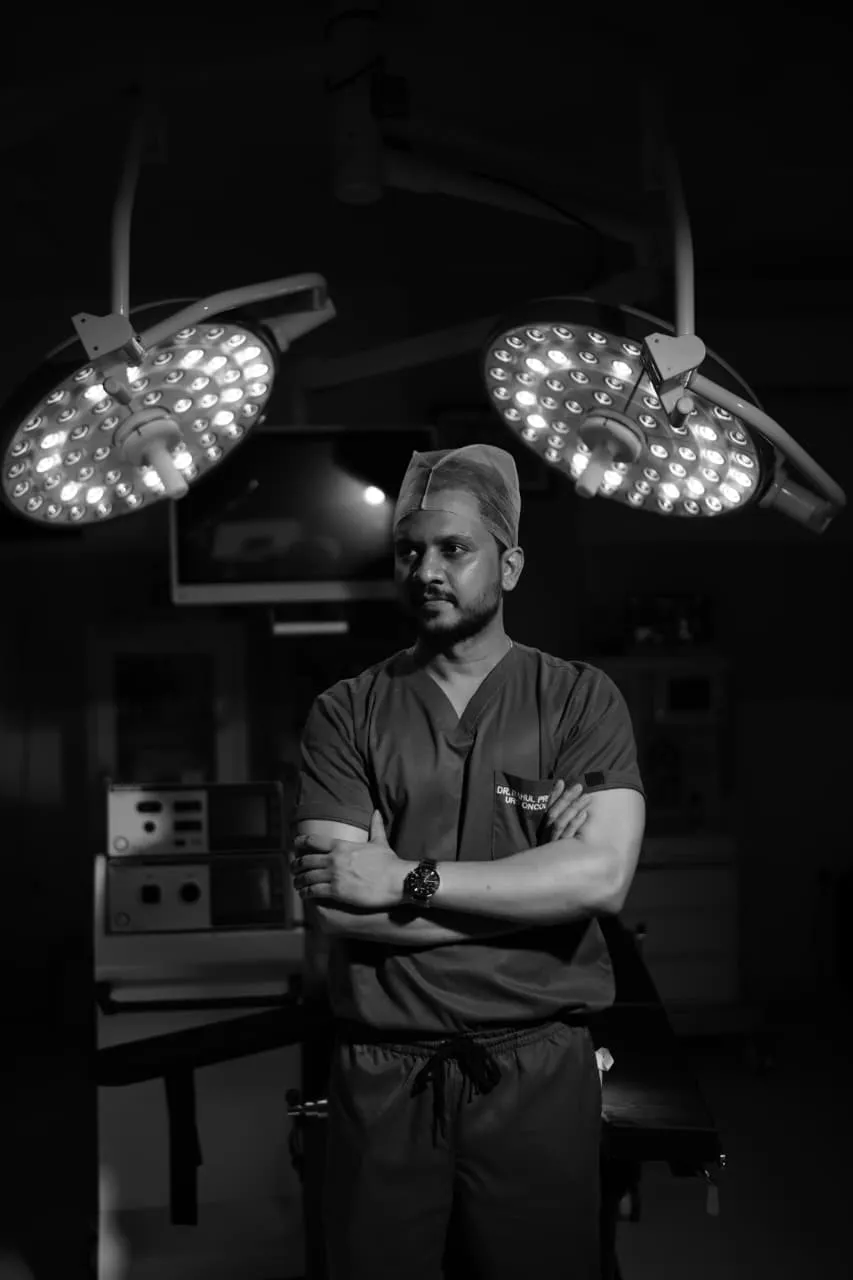
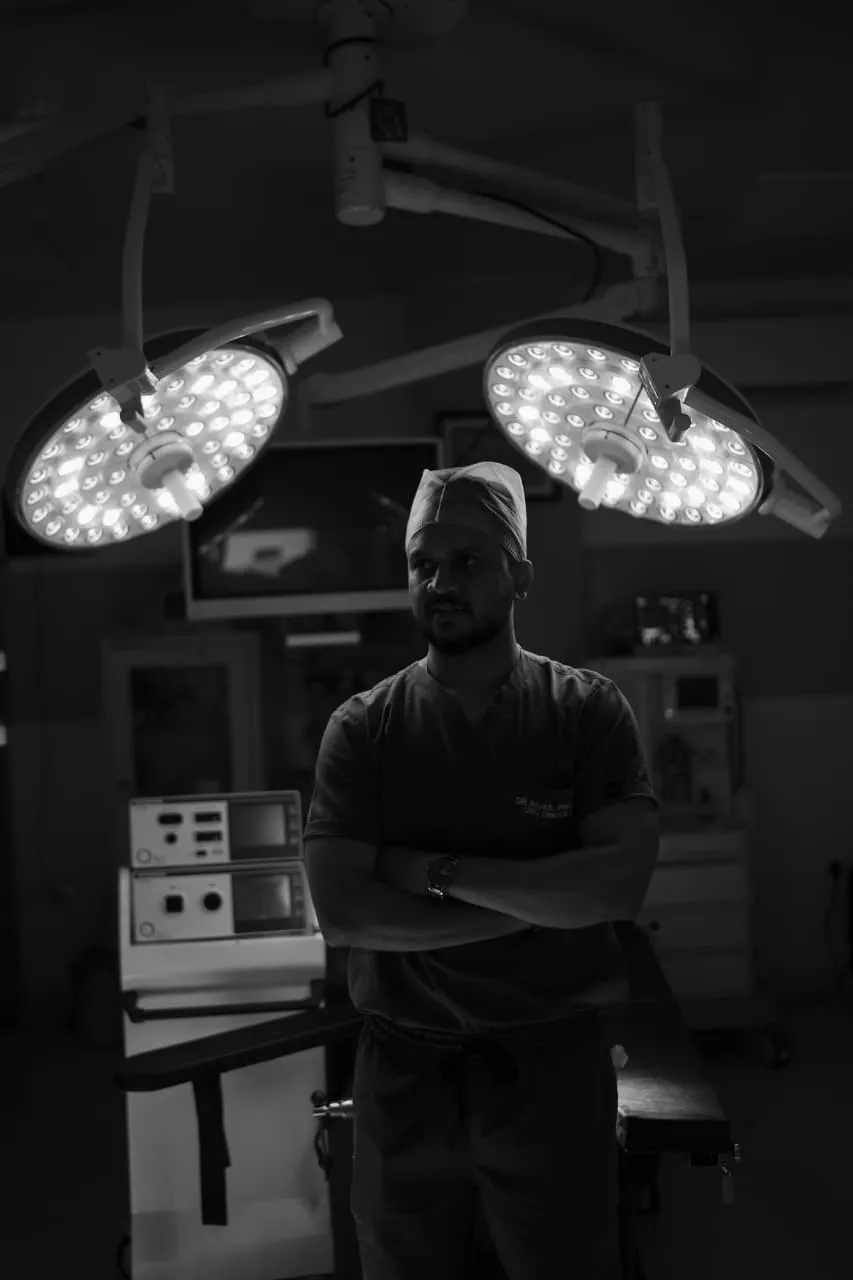
Kidney cancer surgery isn’t something to hand to a generalist. Dr. Pradhan’s practice is built entirely around uro-oncology — kidney, prostate, bladder, testicular, and penile cancers.
Advanced Robotic Surgical Training
His postdoctoral fellowship in Uro-Oncology and Robotic Surgery at Sri Shankara Cancer Foundation, Bengaluru, included training as a Da Vinci console surgeon at one of India’s top five centres for robotic radical prostatectomy.
Treatment Planned Around You
The plan starts from the tumour itself — its size, stage, location — with keeping the kidney intact treated as a genuine priority whenever that’s realistic.


Minimally Invasive Options When Suitable
Robotic and laparoscopic techniques, where they fit the case, tend to mean less blood loss and a quicker return to normal life.
A Team Approach to Cancer Care
For advanced or metastatic cases, medical oncology is brought in from early on, so surgery and systemic treatment aren’t working at cross purposes.
Support Beyond Surgery
Kidney function checks and imaging follow-up stay part of the picture long after you’ve gone home.
If surgery has been recommended for you, seek an individual assessment with Dr. Rahul Pradhan to understand whether robotic kidney surgery fits your case.
—– Common Questions —–
Frequently Asked Questions
Who can be a suitable candidate for robotic kidney cancer surgery?
In most cases, those whose imaging indicates that the tumour remains within the kidney, or is only slightly encroaching upon it. However, size of the tumour is not the only factor that determines this, kidney function and overall fitness for surgery also play a significant role and will always be evaluated first.
Can all kidney cancer patients benefit from robotic surgery?
Not always. An older or high-risk patient with a very small, slow-growing tumour may not require an operation. Once the disease has spread, targeted therapy or immunotherapy will generally be adopted first, and surgery only in selected situations.
What is the difference between partial and radical nephrectomy?
Partial nephrectomy removes only the tumour and leaves the rest of the kidney intact — the recommended treatment for early or small tumours. It is usually performed for large tumours or when the tumour is close to the major vessels and a partial approach is not feasible, and removes the whole kidney.
What are the differences between robotic surgery of the kidney and the open surgery?
In robotic surgery, the surgery will be performed through a few small incisions, the surgeon will be at a console and will have a magnified 3D view of the operation instead of standing over an open incision. Open surgery is still employed, however predominantly where there is a high degree of involvement of the vessels which require a more direct approach.
What is immediately after a robotic kidney surgery?
Over the first few days you will be closely monitored in hospital, and you will be given pain control and getting you up and moving early. Time to go home will depend on the way you are recovering and whether it was a partial or full nephrectomy.