
Why blood shows up with a bladder infection, what else to watch for, and when it’s time to see a doctor.
Seeing blood in your urine is frightening, even when you already know you have an infection. The short answer is yes, a bladder infection can cause bleeding, and it happens more often than most people expect. The blood usually comes along with the burning and the constant need to pee, and it clears up once the infection is treated. But blood in the urine can come from other things too, so it’s not something to sit on and hope for the best.
"When the picture is a clear bladder infection, the bleeding is usually easy to deal with. What people tend to forget is the follow-up. If the blood doesn't go away after treatment, or it comes back later, that needs a proper check."— Dr. Rahul Pradhan, an experienced Uro-Oncologist in Bhubaneswar
What Causes Bleeding During a Bladder Infection?
The bladder is lined with a thin layer of tissue that has lots of tiny blood vessels running through it. When bacteria get in and the lining becomes inflamed, those vessels can leak. Sometimes you’ll see it, as pink, red, or tea-coloured urine. Other times there’s so little blood that only a urine test picks it up, and that hidden kind is actually the more common one.
The amount of blood doesn’t always tell you how bad the infection is. A mild infection can bleed noticeably, and a nastier one might hardly bleed at all. Occasionally small clots show up, and an infection climbing toward the kidneys tends to feel much worse overall. It’s also possible to have an infection and a second problem at the same time, like a kidney stone, which is why doctors don’t stop at the first explanation they find.
Bacteria reach the bladder
The bladder wall becomes irritated
Tiny blood vessels leak
Blood appears in the urine
What Other Symptoms Can Occur With a Bladder Infection?
Blood is rarely the only thing going on. Most people feel a sting or burn when they pass urine and get a strong urge to go again and again, even when almost nothing comes out. You might also notice a dull heaviness low in your belly, urine that looks cloudy or smells stronger than usual, and a general run-down feeling.
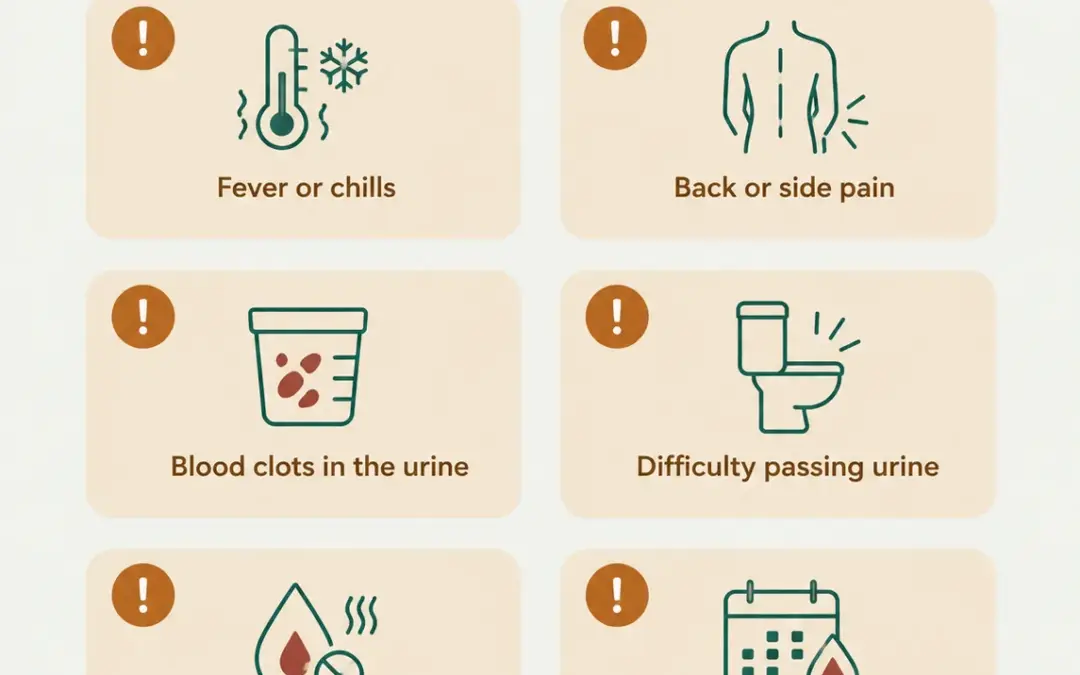
What you really want to watch for is anything suggesting the infection has spread. Fever, chills, pain in your back or side, nausea, or vomiting can mean the kidneys are involved, and that needs medical care soon, not a few days of waiting. If you have blood and any of those symptoms together, get seen the same day if you can.
How Is Bleeding Caused by a Bladder Infection Treated?
First, the doctor confirms what’s happening. A urine test checks for blood cells, infection-fighting cells, and bacteria, and a culture can name the exact germ so the antibiotic is the right one. For a straightforward infection, a short course of antibiotics, lots of fluids, and basic pain relief usually clear things up, bleeding included, in a few days. Take every dose, even if you feel fine by day two.
After that comes the part many people skip. If there’s still blood once the infection is gone, or it keeps coming back, more tests are sensible. Depending on your age and history, that could be an ultrasound, a CT scan, or a cystoscopy, which uses a thin camera to look inside the bladder. It doesn’t mean anything is wrong. It just rules out other causes, including bladder cancer, so nothing gets missed.
When Should You See a Doctor for Blood in the Urine?
Any time you can see blood in your urine, it’s worth getting checked, even if it doesn’t hurt and goes away fast. If you think you have a bladder infection, don’t wait long. Go sooner if you also have a fever, chills, back or side pain, vomiting, clots, or trouble passing urine, because those can point to a kidney infection or a blockage.
Blood with no burning or urgency at all is a different case and needs a full workup, particularly if you smoke or you’re over 40. The same goes for blood that comes back after you’ve finished treatment. A consultation is the quickest way to find the actual cause instead of guessing. And if you’d like to know who you’d be seeing, you can read about Dr. Pradhan’s background first.
Common questions
Is it normal to see blood in urine with a bladder infection?
It’s quite common. An inflamed bladder lining can bleed a little, but any visible blood should still be looked at by a doctor.
How long does bleeding last with a bladder infection?
Usually just a few days once the right treatment starts. If it lasts longer or returns, it needs further checking.
Can a bladder infection cause blood clots?
Now and then, yes, especially with a significant infection. Clots in the urine should always be assessed promptly.
Does blood in the urine always mean infection?
No. Stones, an enlarged prostate, some medicines, and less often cancer can all cause it, which is why testing matters.
Can I treat a bladder infection with bleeding at home?
Drinking plenty of water can ease the discomfort, but an infection with visible blood needs testing and usually a prescription antibiotic.
- Cleveland Clinic. "Hematuria." my.clevelandclinic.org
- Mayo Clinic. "Cystitis: Symptoms and Causes." mayoclinic.org
Noticed blood in your urine?
Book a consultation with Dr. Rahul Pradhan to find the cause and get the right treatment.