
Yes smoking increases the risk of bladder cancer. According to Rahul Pradhan Urology, tobacco is linked to roughly half of all bladder cancer cases, because toxic chemicals in cigarette smoke are filtered into the urine and sit against the bladder lining until the bladder is emptied
According to Dr. Rahul Pradhan, an experienced Uro-Oncologist in Bhubaneswar, “A lot of smokers have no idea their bladder is exposed to the same chemicals as their lungs. The thing I’d want everyone to remember is that bladder cancer usually gives an early warning, which is blood in the urine. If you act on that early, it changes the outcome.”
Quick Fact: Smoking is thought to cause about half of all bladder cancers, and the risk is higher in people who smoke more heavily or for longer.
What Other Factors Increase the Risk of Bladder Cancer?
Beyond smoking, bladder cancer risk rises with age (most cases are diagnosed after 55), is more common in men than women, and increases with occupational exposure to dyes, rubber, leather, and paint chemicals. A personal or family history, chronic bladder irritation from stones or repeated infections, prior pelvic radiation, some chemotherapy drugs, and arsenic in drinking water are additional, less common risk factors.
What's normal after a biopsy
Smoking
Chemicals from tobacco pass through the urine and sit in the bladder until it’s emptied.
Workplace chemicals
Dye, rubber, leather, and paint industries carry higher exposure, especially when combined with smoking.
Age and sex
Risk rises after 55, and men are diagnosed more often than women.
Family or personal history
A past diagnosis, or close relatives with bladder cancer, raises the risk.
Chronic irritation
Repeated infections or long-term stones can irritate the bladder lining over time.
Radiation, chemo or arsenic
Earlier pelvic radiation, certain chemotherapy drugs, and arsenic in drinking water are linked to higher risk.
Factors that increase the risk are a family history of bladder cancer, previous infections, and recurrence of bladder cancer or from long-standing irritation from kidney stones. It has also been associated with past radiation to the pelvis, some chemotherapy agents and arsenic in drinking water. But none of this means you will contract the disease and many people who have no known risk factors do contract the disease. These are just reminders to tune into your body
Quick Fact: Smoking and workplace chemical exposure can act together, so smokers in high-exposure jobs face an especially high risk.
What Warning Signs of Bladder Cancer Should Smokers Watch For?
The most important warning sign of bladder cancer in smokers is painless blood in the urine (pink, red, or tea-coloured), which can come and go even a single episode should be checked.
Most common
- Blood in the urine, often painless
- Pink, red, or tea-coloured urine
- Blood that comes and goes
Less common or later
- Needing to urinate more often
- A sudden, urgent need to go
- Burning that doesn’t settle with treatment
- Back or pelvic pain
- Unexplained weight loss
Some people notice changes in how they pass urine instead, like going more often, feeling a sudden urgent need, or burning while urinating. Those symptoms look a lot like a urinary infection, and infections are far more common, so they’re easy to write off. The giveaway is when they don’t settle with treatment or keep coming back. Back or pelvic pain and unexplained weight loss tend to show up only in later disease, so they aren’t signs to wait for.
Quick Note: Painless blood in the urine is the signal that most needs checking. Pain usually isn’t an early sign of bladder cancer.
How Is Bladder Cancer Diagnosed in People Who Smoke?
A standard way of starting tests is through urine examination, which detects infections, blood presence and any kind of unusual cells. Culturing urine eliminates infection as the cause while the urine cytology test examines cancer cells in urine. These tests are simple and easy to conduct but they do not provide the final diagnosis and therefore the next step is looking inside the bladder.
That’s done with a cystoscopy, where a thin tube with a camera is passed through the urethra so the doctor can see the bladder lining directly. If something looks suspicious, a small sample can be taken, or the growth removed, during the same procedure and then examined to confirm what it is. A CT scan may follow to check the rest of the urinary tract and whether anything has spread. If you’ve smoked for many years, your urologist will often be extra thorough with these tests, since your risk is higher.
Quick Fact: Cystoscopy is the key test for bladder cancer, because it lets the doctor see the bladder lining directly instead of relying on urine tests alone.
When Should You See a Doctor About Possible Bladder Cancer?
If you ever see blood in your urine, book an appointment. That goes even if it doesn’t hurt, even if it stops, and even if you’re fairly sure it’s just an infection. The same applies to urinary symptoms that last more than a couple of weeks, keep returning after treatment, or come with blood. If you smoke or have worked around industrial chemicals, don’t put it off.
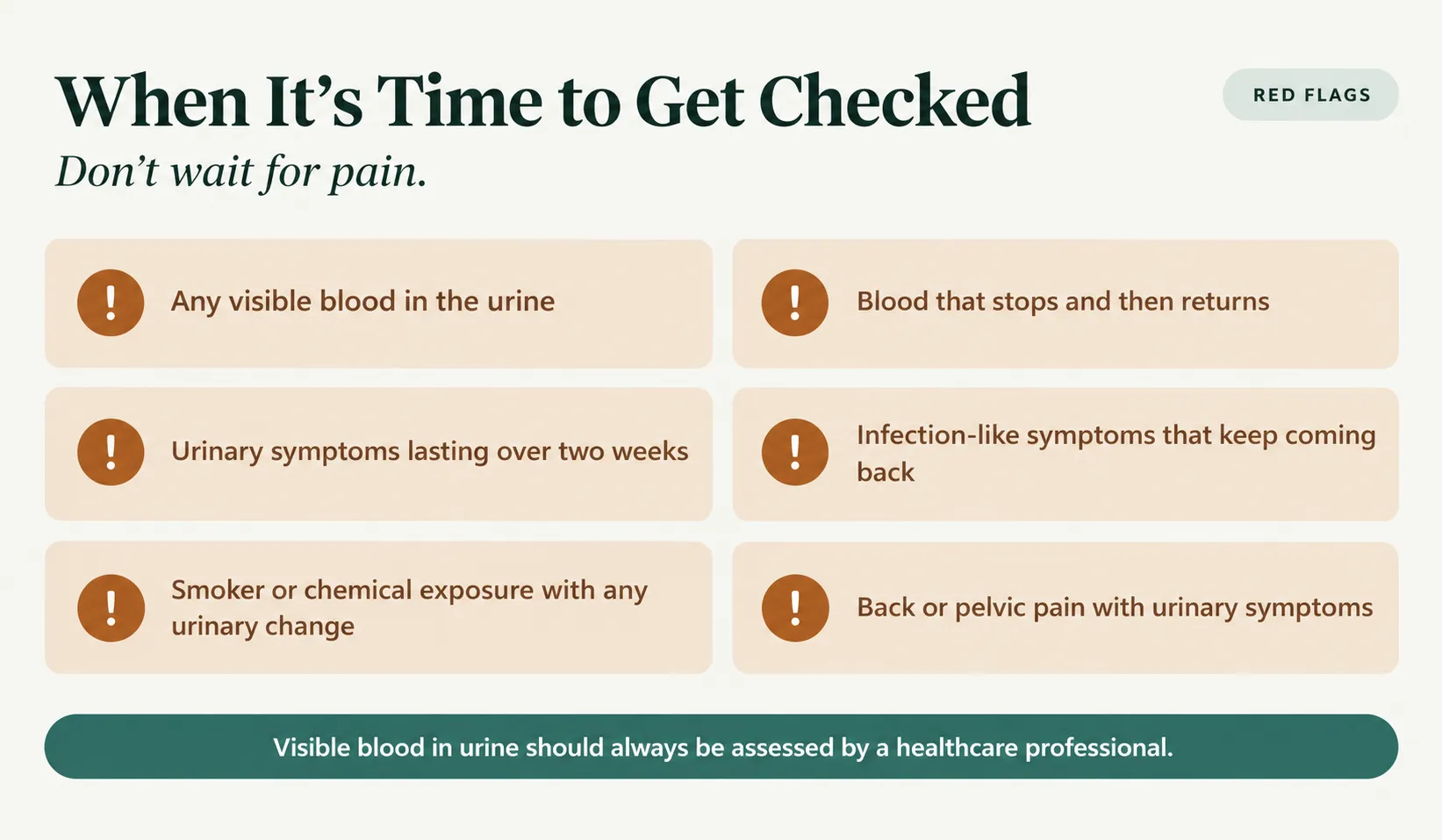
Most of the time, blood in the urine has a harmless cause. The only way to be sure is to check, and bladder cancer caught early is much easier to treat than when it’s found late. A consultation lets a urologist find the cause and, if needed, plan treatment such as bladder cancer surgery. If you’d like to know who you’d be seeing, you can read about Dr. Pradhan’s background first. And if you smoke, the best thing you can do for your bladder is stop, ideally with your doctor’s support.
Quick Note: Quitting smoking lowers bladder cancer risk over time, and the benefit keeps building the longer you stay smoke-free.
FAQs
1. How is early bladder cancer treated?
Early bladder cancer is often treated by removing the tumour during cystoscopy, sometimes followed by treatments placed directly into the bladder; your urologist will plan care based on the findings.
2. Does quitting smoking reduce my risk of bladder cancer?
Yes. Risk decreases with the passage of time following cessation and benefit increases with duration of no smoking.
3. Is vaping linked to bladder cancer?
Evidence on e-cigarettes and bladder cancer is still emerging and less established than for cigarettes; the safest choice is to avoid all tobacco and nicotine products.
4. How many cigarettes a day increases bladder cancer risk?
Risk rises with both how much and how long you smoke; there is no “safe” amount, and even light smoking carries added risk compared with non-smokers.
5. What is the confirmatory test for bladder cancer?
A cystoscopy is the confirmatory test; it lets the doctor see inside the bladder and take a tissue sample for examination.