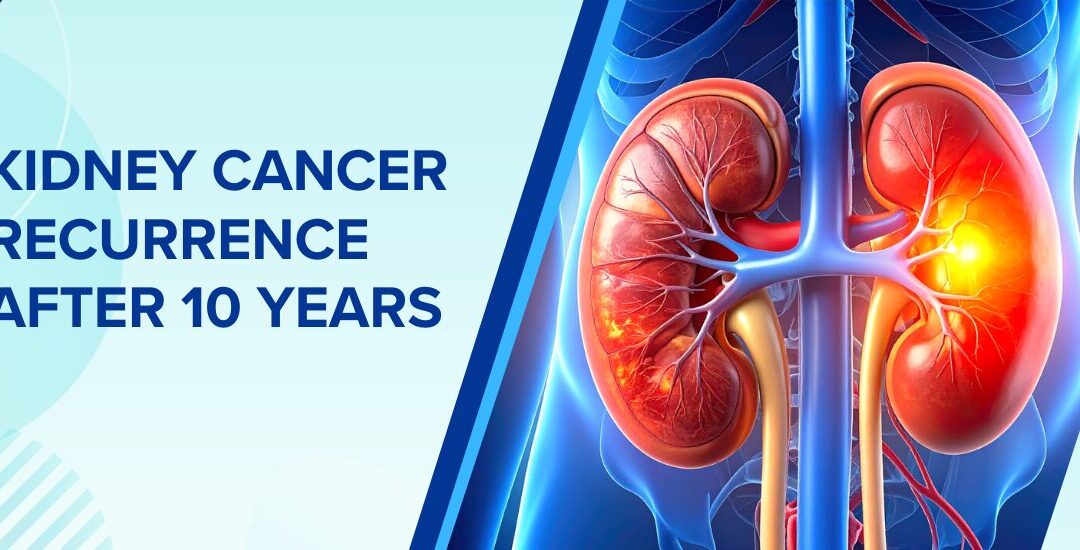
Most people think that once kidney cancer is gone for 10 years, it’s gone for good. But it can come back even after a decade, sometimes longer. This is called late recurrence, and it happens in about 5 to 10 percent of patients who had their original cancer treated successfully. The good news is that late recurrence is usually slower-growing and often easier to treat than cancer that comes back quickly after surgery. Catching it early through regular check-ups makes all the difference.
According to Dr. Rahul Pradhan, a senior Consultant Uro-Oncologist and Urologist in Bhubaneswar, “Most patients who reach the ten-year mark stay cancer-free for life. The small number whose cancer comes back have the best chance of cure when it’s caught on a scheduled scan, not after symptoms appear.”
Symptoms of Kidney Cancer Recurrence You Should Not Ignore
When kidney cancer comes back after many years, the early signs are usually subtle. Many patients confuse them with normal ageing or stress. Knowing what to watch out for helps you act early.
Common signs to watch for include:
- A cough that won’t go away or trouble breathing: The lungs are where kidney cancer most often spreads first. A cough that lingers for weeks, blood in the phlegm, or feeling out of breath without reason should be checked.
- Bone pain that won’t go away: Pain in the hips, back, or ribs that doesn’t improve with rest or painkillers can be a sign of cancer spreading to the bones.
- Unexplained weight loss: Losing more than 5 percent of your body weight without trying, over a few months, is a warning sign that something inside the body has changed.
- Constant tiredness: Feeling exhausted even after a full night’s sleep, beyond what you’d expect for your age, can be an early signal.
- Loss of appetite or feeling full quickly: When food doesn’t taste good or you feel full after just a few bites, it’s worth investigating, especially if paired with other symptoms.
- New lumps anywhere on the body: Especially in the neck, under the armpits, or in the groin. Any new lump that lasts more than two weeks should be checked.
- Changes in urine: Blood in the urine, pain while passing urine, or a noticeable change in how often you go to the toilet.
If you’ve had kidney cancer surgery in the past, any of these signs deserve attention, even years after your last check-up.
Worried about symptoms after kidney cancer treatment? Book a consultation today with one of the leading uro-oncologists in Bhubaneswar and get a proper evaluation.
Risk Factors for Kidney Cancer Recurrence After 10 Years
Not every kidney cancer survivor has the same chance of seeing the disease come back. Certain factors raise the long-term risk, and knowing your own risk profile helps you and your doctor decide how closely to monitor.
The main risk factors include:
- Size of the original tumour: Cancers that were larger than 7 cm at the time of removal are more likely to come back, even after 10 years.
- Stage at first diagnosis: Stage 3 or higher disease has a higher long-term recurrence rate than Stage 1 or Stage 2.
- Aggressive cancer cells: Cancers with what doctors call “high-grade” or “sarcomatoid features” behave more aggressively and can come back over longer time periods.
- Lymph nodes involved at first surgery: Even one positive lymph node raises the long-term recurrence risk significantly.
- Incomplete removal at first surgery: If the surgeon found it difficult to remove all the cancer, there’s a higher chance of it returning later.
- Smoking after treatment: Continuing to smoke or starting again raises the long-term risk of both recurrence and new cancers.
- Family history of kidney cancer: Some genetic conditions, like Von Hippel-Lindau disease, mean lifelong monitoring is needed.
Here’s how long-term recurrence risk varies based on these factors:
Original Risk Profile | 10-Year Recurrence Risk | Recommended Long-Term Follow-Up |
Low risk (small, low-grade, no nodes) | Under 5% | Annual scans up to 10 years |
Intermediate risk (medium size, average grade) | 10-20% | Imaging every 1-2 years, lifelong |
High risk (large, high-grade, nodes positive) | 25-40% | Imaging every 6-12 months, lifelong |
Lifestyle factors like smoking, weight, and blood pressure also play a real role. Staying healthy after treatment isn’t just about feeling good. It directly affects how well your remaining kidney works and how likely the cancer is to return.
Treatment Options for Kidney Cancer Recurrence
When kidney cancer returns after 10 years, treatment is usually different from what you had the first time. The good news is that more options are available now than even a few years ago, and outcomes have improved significantly.
Main treatment approaches include:
- Surgery to remove the recurrence: When the cancer comes back in just one or two spots, removing those areas through laparoscopic or open surgery can give excellent long-term results, especially when found early. Doctors call this a metastasectomy.
- Targeted therapy: Newer cancer drugs like sunitinib, pazopanib, or cabozantinib work by cutting off the blood supply to cancer cells. They’re taken as pills at home and have helped many patients live much longer with advanced kidney cancer.
- Immunotherapy: Medications like nivolumab and pembrolizumab help your own immune system recognise and attack cancer cells. They’ve changed the outlook for many patients with recurrent disease.
- Combination therapy: Combining targeted therapy with immunotherapy has become the standard for many patients with advanced or recurrent disease, offering better results than either approach alone.
- Radiation therapy: Useful for treating cancer that has spread to bones or the brain, to ease pain and stop the disease from progressing further.
- Active surveillance: When a recurrence is small, slow-growing, and not causing any problems, doctors may choose to monitor it carefully before starting treatment, especially in older patients.
Treatment depends on where the cancer returns, how many spots are involved, and your overall health. Patients with recurrence in one area often do best with surgery first, followed by targeted therapy or immunotherapy if needed. The principles of major surgery for multi-organ cancer apply similarly to advanced kidney cancer.
Patients across Odisha trust Dr. Rahul Pradhan for kidney cancer recurrence management because of his thorough approach to long-term surveillance, surgical precision in removing recurrent tumours, and clear coordination with medical oncology teams for newer drug therapies.
Concerned about kidney cancer coming back after many years? Book a consultation today with one of the leading uro-oncologists in Bhubaneswar and get a clear surveillance and treatment plan tailored to your needs.
FAQs
Can kidney cancer come back after 10 years of being cancer-free?
Yes, though it’s uncommon. About 5 to 10 percent of patients see late recurrence even after 10 years, which is why long-term follow-up matters.
Where does kidney cancer usually spread to?
The lungs are the most common place, followed by bones, liver, brain, and other lymph nodes.
How is late kidney cancer recurrence diagnosed?
Through CT scans, MRI, PET-CT, blood tests, and sometimes a biopsy of the suspected area to confirm whether it’s the same cancer returning.
Is late kidney cancer recurrence harder to treat than early recurrence?
Actually no. Late recurrences often respond better to treatment than early ones because they tend to grow more slowly and respond well to modern targeted drugs and immunotherapy.
Should I keep going for check-ups after 5 years?
Yes, especially if you had a higher-risk original cancer. Many specialists now recommend lifelong follow-up at less frequent intervals after the first 5 years.