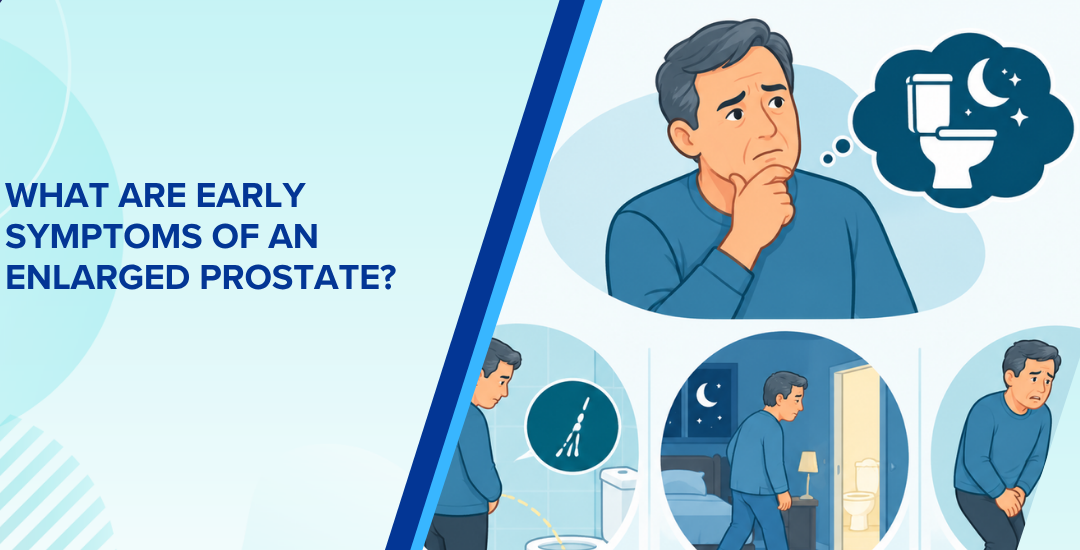
Pain isn’t how an enlarged prostate usually announces itself. The first symptoms of an enlarged prostate show up at the toilet instead. The gland sits around the urethra, so as it grows it narrows the channel urine has to pass through. Doctors call the condition benign prostatic hyperplasia, or BPH. The stream turns weak or slow. There’s a pause before it starts. Nights get broken by repeat trips to the toilet, and some men feel a sudden urge that’s hard to hold back, or find a few drops dribbling out afterwards. These changes build slowly. So they’re easily put down to ageing.
According to Dr. Rahul Pradhan, a Urologist in Bhubaneswar, “Most men put the first signs down to age. A slower stream or an extra trip to the toilet at night doesn’t feel like a medical problem, so it often goes unchecked for years. Spotting the pattern early simply makes the next steps easier.”
What Are the First Warning Signs of an Enlarged Prostate?
Enlarged prostate symptoms nearly always start from the same place: a urinary channel with less room than before.
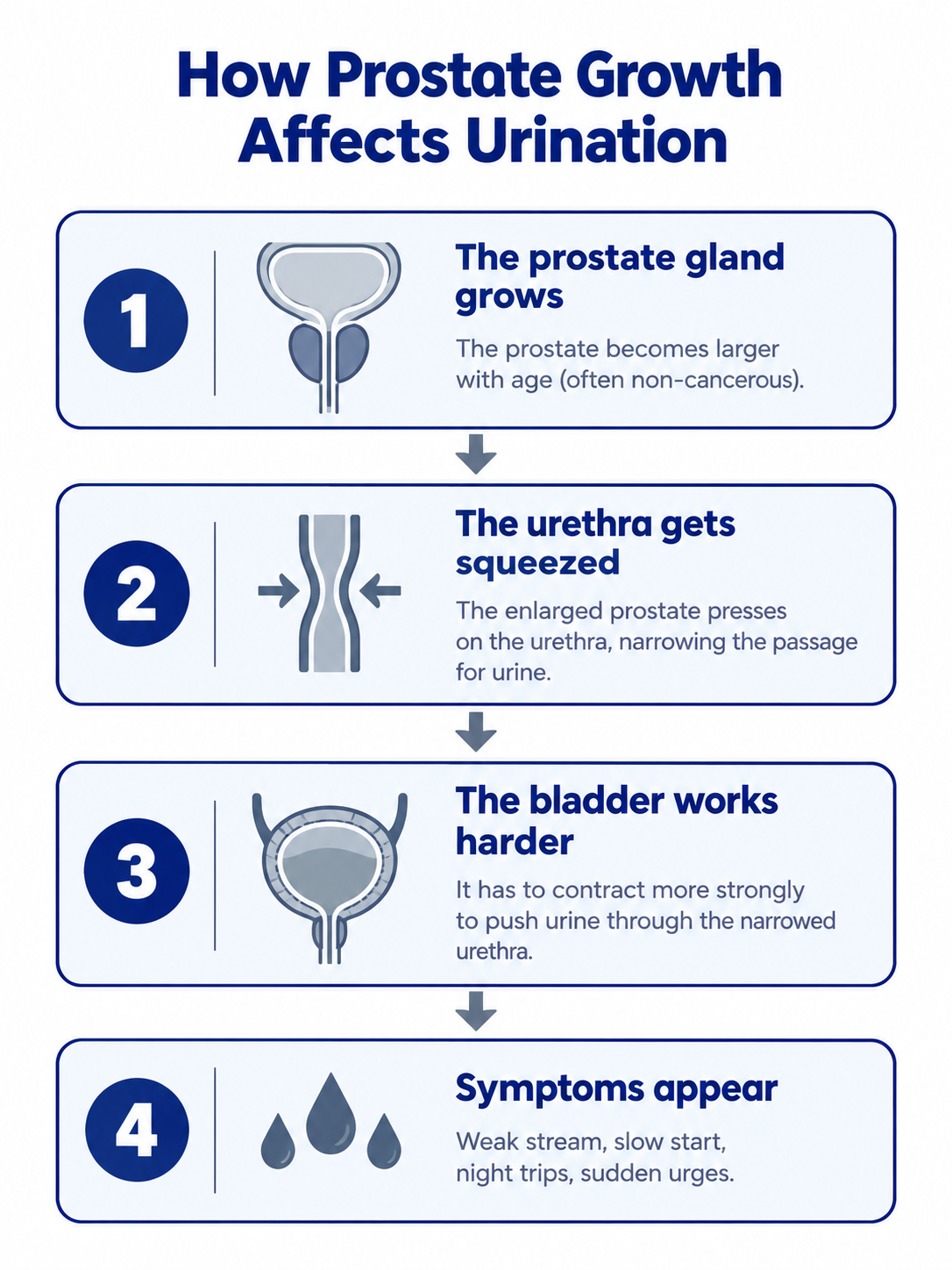
- Weak or slow stream: The passage is narrower, and the bladder has less force to work with against it. A stream that splits, trickles or cuts out halfway is typical.
- Hesitancy: You stand there and nothing comes. A few seconds, sometimes longer, and often a push to get things started.
- Frequent urination, especially at night: The bladder doesn’t empty fully, so it’s already part full again within the hour. Two or more night trips (nocturia) is where most men finally mention it, though the evening cup of tea usually gets blamed first.
- Urgency and dribbling: A sudden need to go that’s hard to put off, or a few drops leaking once you’ve finished. A bladder that’s irritated and not emptying well causes both.
These signs overlap with other prostate problems, including cancer, so a PSA test and a clinical examination are what separate them, as outlined on the page covering prostate cancer treatment.
What Happens to the Symptoms Over Time?
The first stage is easy to shrug off. Symptoms of enlarged prostate rarely stay that mild forever.
Stage | Typical picture | What’s happening |
Mild (first stage) | A slightly slower stream and a hesitant start. One night trip at most. | Growth has begun, but the bladder muscle still keeps up |
Moderate | Getting up two or three times a night, a sudden rush to find a toilet, the sense of not quite finishing | The bladder muscle strains against the blockage |
Advanced | A stream that needs real effort, infections that keep coming back, or nothing coming out at all | The blockage is now significant, and medicines or surgery are usually needed |
- Unable to pass urine: If nothing will come and the lower belly feels full and painful, that’s acute urinary retention. Head to an emergency department. It can’t wait for a clinic appointment.
- Blood in the urine: The prostate itself can be the source. Infection, stones and cancer are others. Don’t guess which.
- Burning with fever or chills: Put together, they point to a urinary tract infection. Bacteria settle in more easily when urine sits in the bladder instead of leaving it.
- Sleep and daily routine are suffering: Not urgent, but don’t ignore it. If outings are being planned around the nearest toilet, that’s a symptom in its own right. Doctors can assess the severity using a short questionnaire called the International Prostate Symptom Score (IPSS).
Size plays a part as well, and the numbers behind the word “enlarged” are laid out in our guide to normal prostate volume.
Will the Prostate Ever Go Back to Its Old Size?
Not by itself. Once the gland has grown it tends to stay that way, but the symptoms can still be brought under control, and a few medicines even shrink it a little.
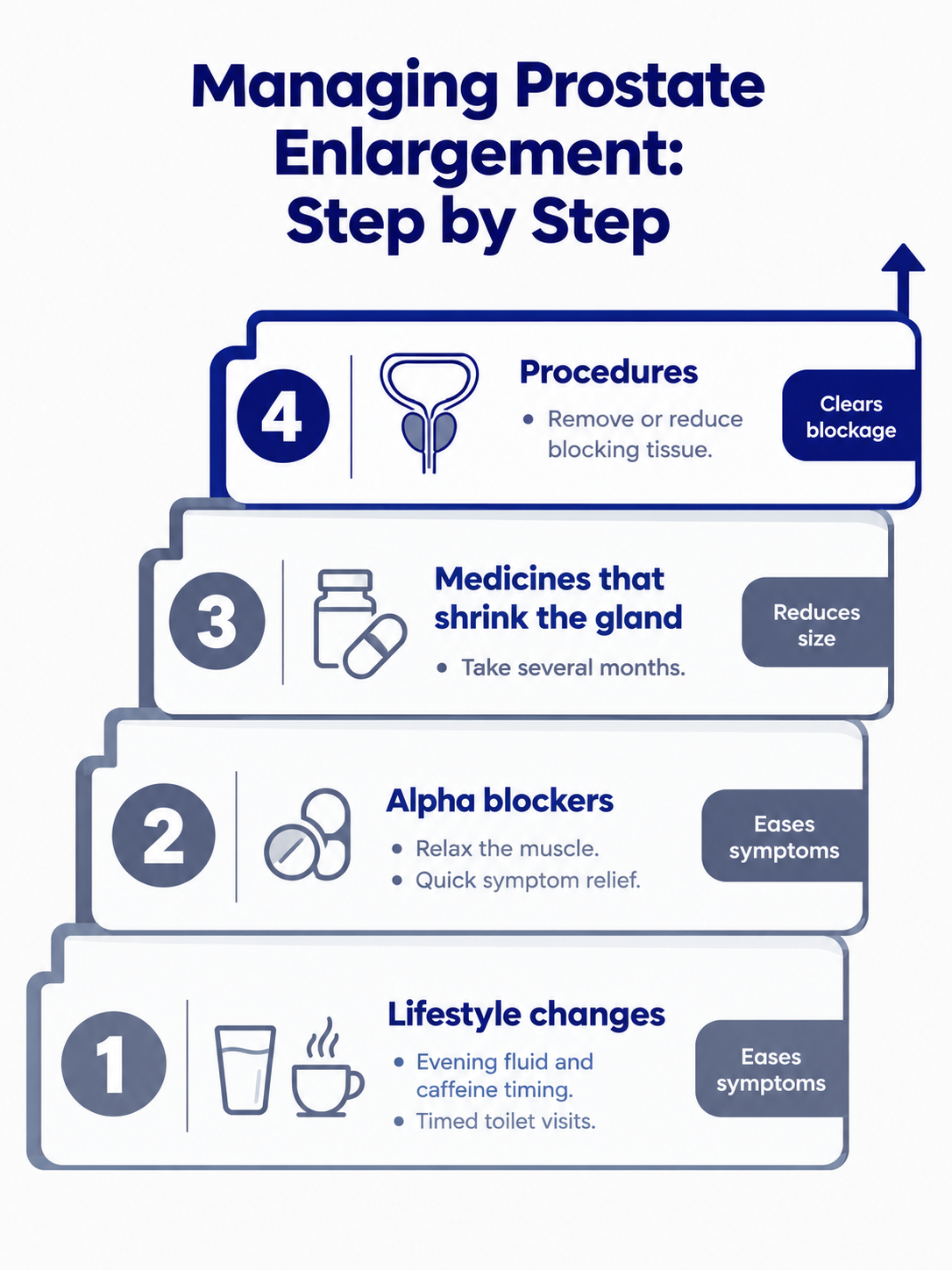
- Lifestyle changes: Ease off the coffee and alcohol after dinner, spread your fluids over the day, and stop drinking about two hours before bed. That alone can cut night trips. They can ease symptoms, but they don’t shrink the prostate gland.
- Alpha blockers: They relax the muscle at the bladder neck and around the prostate, which opens things up. Many men feel the difference within days. But the gland itself doesn’t change size.
- Medicines that shrink the gland: Finasteride and dutasteride, the 5 alpha reductase inhibitors, can reduce prostate volume by up to a quarter. That takes months rather than days, and larger glands see the most benefit.
- Procedures: When tablets aren’t enough, a surgical or laser procedure removes or reduces the tissue doing the blocking. Relief comes fastest this way. No tablet shrinks a prostate overnight.
The right choice depends on gland size, symptom score and general health, and laser based options are explained in more detail in our guide to laser prostate treatment.
Key Takeaways
Early enlarged prostate symptoms are almost all about urination: a weaker flow, a slow start, interrupted sleep, sudden urges, a little leaking afterwards. They creep in over years. Once grown, the gland rarely shrinks back unaided, though lifestyle changes, medicines and procedures all help in different ways. Mild changes can simply be watched. Being unable to pass urine, seeing blood, or running a fever with urinary pain needs prompt attention.
Not sure which urinary changes point to prostate enlargement?
FAQs
What is the first stage of prostate enlargement like?
Subtle: a slightly slower urine stream, a slow start, perhaps one extra night trip.
Can an enlarged prostate shrink back on its own?
Seldom without treatment. Some medicines shrink it; procedures remove the blocking tissue.
How quickly can an enlarged prostate be shrunk?
Shrinking medicines take months. Procedures clear the blockage far sooner.
What are the 5 warning signs of an enlarged prostate?
A weak stream, a slow start, night waking, sudden urges, and leaking afterwards.
Disclaimer: This blog is for educational and informational purposes only and should not be considered professional advice.