
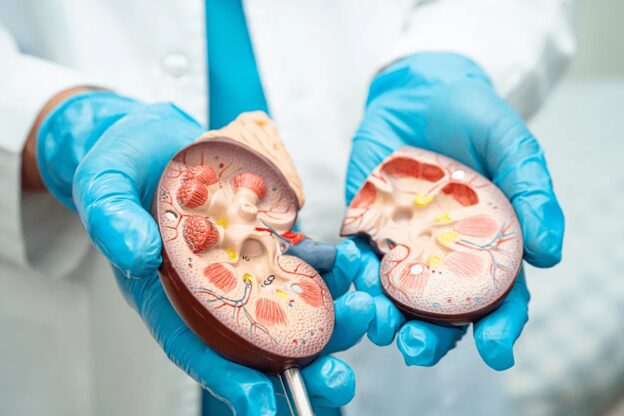
Yes, kidney stones can affect bowel movements. When a stone causes pain, blocks urine flow, or triggers nausea, the digestive system often reacts too. Patients commonly experience constipation, bloating, loose motions, or a loss of appetite. The connection is real, and it usually settles once the stone is treated. Roughly 1 in 3 kidney stone patients report some digestive change during an episode.
According to Dr. Rahul Pradhan, an experienced Urologist in Bhubaneswar,
“Patients often walk in thinking they have a stomach problem when it’s actually a kidney stone causing the trouble. The kidneys and the gut share nerves and space in the belly, so what affects one often affects the other.”
Why Do Kidney Stones Affect the Digestive System?
The kidneys and intestines sit right next to each other in the belly, and they share the same nerve supply. So when a kidney stone starts causing trouble, the digestive system often gets pulled into it too. It’s why so many patients feel gut symptoms alongside the classic kidney pain.
Here’s what usually happens inside the body:
- Nerves get overloaded: The same nerves that carry pain signals from the kidneys also connect to the intestines. When one of them flares up, the other slows down. That’s often why the gut feels off during a stone attack.
- The intestines temporarily stop working: Severe kidney pain can make the intestines pause completely. Doctors call this reflex ileus. It’s what causes the bloating and constipation many patients notice during an episode.
- Nausea and vomiting kick in: Kidney pain sends signals through the vagus nerve, which triggers nausea. Many patients throw up several times during a bad episode, which then disrupts digestion further.
- Eating and drinking drop: Nobody wants to eat or drink when they’re in this much pain. Even a day or two of reduced intake is enough to cause constipation on its own.
- Nearby organs get squeezed: A big stone, or a kidney swollen from being blocked, can physically press against the colon and change how food moves through it.
Most of these effects settle down once the stone passes or is treated. But during an active episode, the symptoms often look so similar to a stomach problem that patients get misdiagnosed at first which is why understanding the connection matters.
Symptoms That May Occur Along With Kidney Stones
Kidney stones don’t just cause back or side pain. When they’re active, they often set off a whole range of symptoms across the belly and digestive tract. Most patients only pick up on the classic pain in the side, and end up missing the digestive signals for days, until a doctor points out that both are connected.
Here are the symptoms to look out for:
- Sharp pain in the side or lower back: This is the one everyone knows. The pain comes in waves, and can travel down to the groin.
- Nausea or vomiting: The kidney and the stomach share a nerve pathway, so kidney pain often triggers nausea. Many patients think it’s a stomach bug at first.
- Constipation: During a pain episode, the intestines slow right down. This can last 2 to 3 days even after the pain settles.
- Bloating and gas: As the gut slows, gas gets trapped and the belly feels tight and heavy.
- Loose motions or diarrhoea: Less common, but it happens. The gut sometimes reacts to inflammation by speeding up instead of slowing down.
- No appetite at all: Almost everyone loses their appetite during a severe stone episode. Food just feels impossible.
- Blood in urine: The stone can scratch the lining of the urinary tract as it moves, so urine may look pink, brown, or reddish.
- Burning while peeing or going more often: Especially noticeable when the stone is close to the bladder.
If bloating and belly pain don’t settle within a few days, or if there’s any blood in the urine, it’s worth checking for a kidney stone rather than just treating the digestive symptoms on their own.
Risk Factors That May Increase Digestive Problems During Kidney Stones
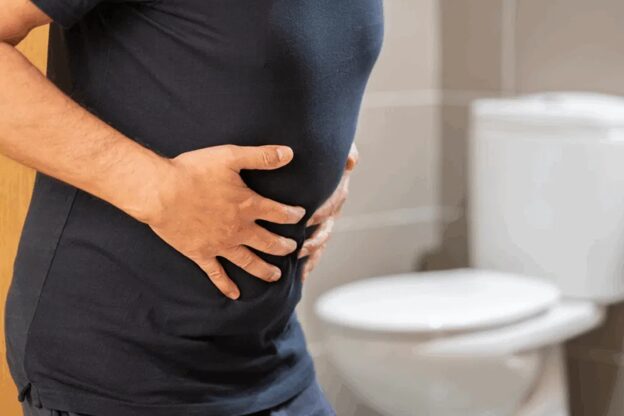
Not every kidney stone causes digestive symptoms. Some patients pass a stone with almost no gut trouble, while others end up bedridden with vomiting and constipation. A few factors decide who gets hit harder.
The most common ones are:
- Larger stone size: Stones above 6mm cause more intense pain, which increases the nerve response affecting the gut.
- Stone stuck in the ureter: Stones lodged in the tube between the kidney and bladder produce the strongest reflex gut slowdown.
- Dehydration: Low fluid intake worsens both stone symptoms and constipation at the same time.
- Pre-existing digestive issues: Patients with IBS, chronic constipation, or acid reflux tend to have stronger gut reactions during a stone episode.
- Painkiller use: Strong opioid painkillers used during severe stone attacks slow the intestines further and often cause constipation.
- Reduced activity: Bed rest during pain also slows bowel
- Older age: Bowel function naturally slows with age, so older patients feel digestive symptoms more sharply.
Managing hydration and gentle movement during a stone episode helps a lot. Doctors often recommend starting a mild laxative alongside pain management to prevent constipation. For patients whose stones need surgery, laser stone surgery offers same-sitting clearance with quick return to normal digestion.
When Should You Consult a Doctor?
Most people wait too long during a kidney stone episode. They try to manage it at home with painkillers and hope it passes. Sometimes it does, but if certain symptoms appear together, waiting can turn a manageable problem into an emergency.
Book a consultation right away if you notice:
- Severe pain that painkillers don’t control: Regular medicines like paracetamol or antispasmodics aren’t holding the pain.
- Fever or chills: This suggests infection alongside the stone, which is a genuine emergency.
- Blood in urine that keeps recurring: Even after the pain settles, ongoing bleeding needs a scan.
- Vomiting that won’t stop: If you can’t keep water down, dehydration will make everything worse.
- No urine or very little urine: Suggests complete blockage. This needs urgent evaluation.
- Belly bloating and constipation that lasts beyond 3 days: Especially if paired with any kidney pain.
- A single functioning kidney: Any stone episode in patients with one working kidney needs urologist evaluation.
If stones keep coming back, the workup includes a 24-hour urine analysis, blood tests, and dietary review to prevent future episodes. Kidney health is closely tied to overall wellbeing, so patients with recurrent stones should also have their kidney function checked periodically. For more on when a stone actually needs surgery versus watchful waiting, see our detailed post on kidney stone sizes that require surgery.